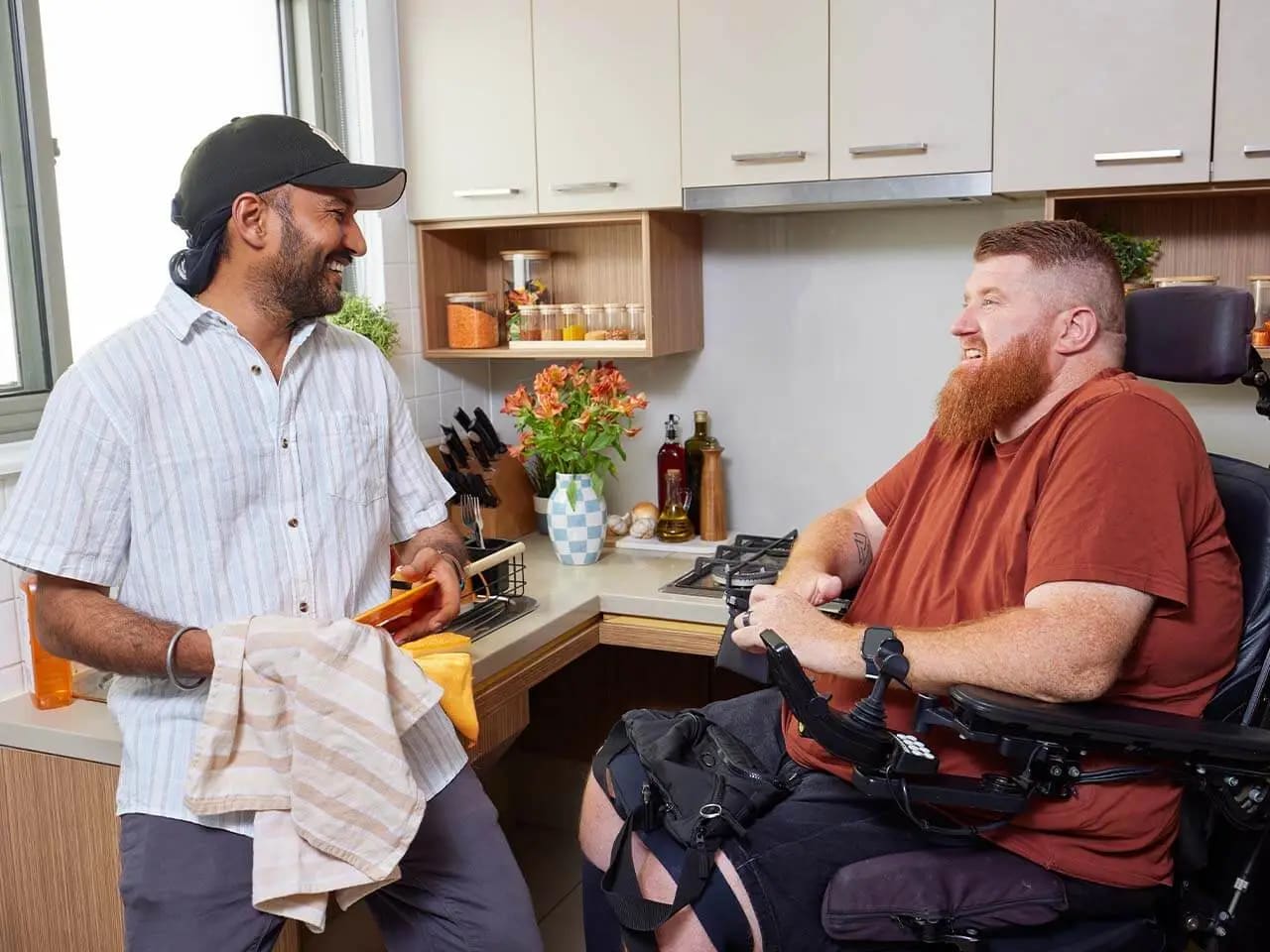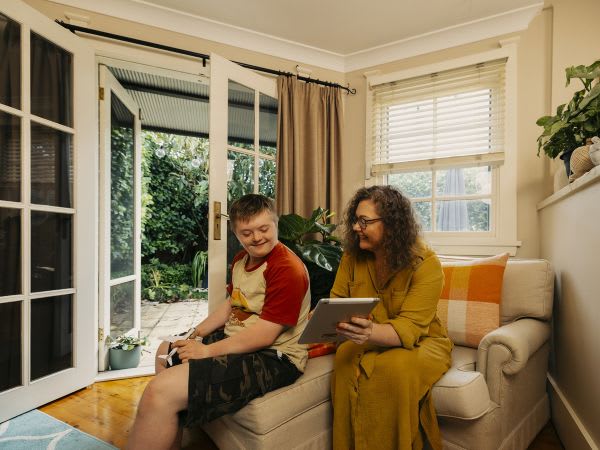

One of the most beautiful aspects of Mable is the incredible diversity of the people who seek and provide support on the platform.
I’m a support worker and I’m proud to identify as part of the LGBTQIA+ community.
I feel so lucky to have met amazing people who have shared with me their experiences of using Mable, and what it means for support workers to be inclusive.
These insights were valuable to me, and I hope they help you too.
Badge up, show up
When I started my Mable journey, I wasn’t sure if I should mention this part of my identity on my support worker profile.
I didn’t know if it was relevant or how it would be received.
I have always been passionate about supporting others from the LGBTQIA+ community. So I was pleasantly surprised to find Mable’s ‘LGBTQIA+ friendly’ badge.
Through this badge, you can let clients know you are an ally to people of diverse sexual orientations and gender identities.
There are many ways to be an ally to the community:
- You identify as part of the LGBTQIA+ community yourself
- You believe in being inclusive and respectful towards people of all walks of life
- You want to learn, or you are passionate about equality and LGBTQIA+ rights and issues.
By having this badge on your Mable support worker profile, you’re showing that you are committed to creating a safe and supportive space for LGBTQIA+ clients.
Practise those pronouns
One way for support workers to be inclusive is to respect and use people’s correct pronouns.
Pronouns are the words we use to refer to someone, such as she, her, they, them, he, him.
We all have them, and in working with people from the LGBTQIA+ community, it can be helpful for these to be posted on your profile.
This allows people to be open with you about their pronouns too. Keep an eye out for the pronouns they use.
If you’re unsure, ask them in a respectful way.
There are many websites and resources that explain pronouns and their importance, and doing this research can help you to feel more confident in communicating.
This is particularly important when supporting non-binary or transgender people on the platform, and in making them feel seen and validated in their identity.
Gender neutral language
Another key tip to being inclusive is to be conscious of the language you use every day.
A lot of the language we use, consciously or subconsciously, tends to be centred around the idea of ‘heteronormativity’.
Heteronormativity is the belief that heterosexuality, a person being attracted to people of the opposite gender, is the only legitimate or acceptable expression of sexuality.
For example, asking someone ‘Do you have a girlfriend?’ is thinking that a person is straight. Instead, we can be more inclusive by asking ‘Do you have a partner?’
We may also unconsciously attach gendered language in the way we speak about people. For example, ‘She’s an awesome girl’ or ‘He’s a cool guy’.
For people of the LGBTQIA+ community, gendered language can sometimes create discomfort. The need to correct these assumptions can be uncomfortable too.
Intersectionality
It is important to recognise how someone’s LGBTQIA+ identity may overlap with other parts of their identity to impact the way they experience the world.
For example, identifying as part of the LGBTQIA+ community, and having a disability. Or being part of the LGBTQIA+ community and identifying as part of a certain cultural group.
To be able to empathise with how a person experiences the world, it’s important to be aware of the diversity and uniqueness that exists in everyone’s stories.
Just because someone identifies as LGBTQIA+ does not mean they’ve had the same experiences as someone else in the community.
Understanding the ways in which different parts of someone’s identity impact their lives allows us to support them well in different situations.
Be a lifelong learner
This is my simplest yet most powerful tip.
In my experience, the LGBTQIA+ community on Mable includes some of the most resilient, vibrant, fun-loving and compassionate people I’ve ever met.
These include both those looking for support and support workers.
There is so much diversity to be celebrated, which means that there is a lot to learn too.
Despite our best intentions, we might not always get things right the first time. Being inclusive or being an ally isn’t about perfection.
It is about learning from the people within the community we are committed to supporting, listening to them, and constantly growing from the things we could have done better.
Regardless of how you identify, we can all relate to the warm and fuzzy feeling that we get when someone sees and accepts you for the person you truly are.
In being inclusive as support workers, we make sure we can build connections based on this feeling, and the safety, mutual respect and understanding that comes along with it.
If you would like to learn more about how to provide the best support you can to the LGBTQIA+ community, here are some great resources to get you started.
About Sasha
Sash (she/her) is a queer identifying social worker with a background in social work. She is passionate about supporting people experiencing complex mental health issues and using her lived experience to support people from the LGBTQIA+ community.