Top tips on writing your Mable support worker bio

Support Workers

Last updated

24 Nov 2015

Reading time

3 min read

Share

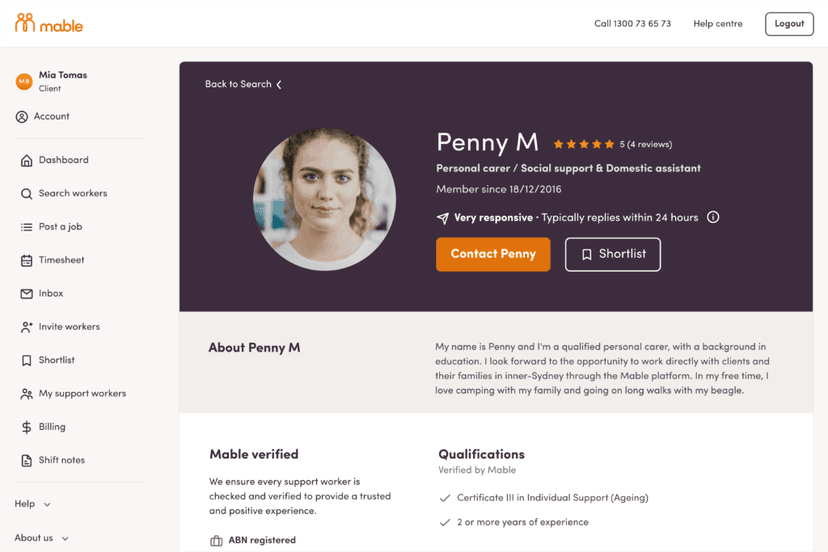
If you're an independent support worker on Mable, your bio is an opportunity to tell clients about yourself. Your bio sits directly underneath your profile photo and can include details about you, such as:

  • Your motivation for becoming a support worker
  • Your interests and hobbies (for example, hiking)
  • Your skills (for example, you play the piano)
  • Your background and experience
  • Your achievements
  • Your personality traits or qualities (for example, your organisational skills).

A well-written bio can lead to connecting with more clients, potentially leading to more bookings. It can be tricky to write about yourself, so we've sourced some tips to help you write the best Mable profile possible.
Dos and don'ts

Top tips

  • Your bio should be concise, including only relevant information. Aim for 150-200 words
  • Highlight your achievements
  • Have your most important information at the beginning, not in the middle or the end
  • Sound professional and approachable
  • Ensure your bio has correct spelling and grammar
  • Give a timeframe for when you aim to respond to messages
  • Use short, easy-to-read sentences.

Things to avoid

  • Do not include your qualifications in your bio. This ensures the Mable team can approve your profile as quickly as possible. Include your qualifications only in the 'Education/Work history' section
  • Do not abbreviate or use colloquial language
  • Don't write a bio that's too long, not all clients can or will read a long bio
  • Do not give away your last name or contact details. For your safety, all communication should go through the Mable platform, including Team Chat. You will not be insured if you do not book work through the Mable platform.

Here's an example of a good, concise bio:

Hi, my name is Jill. I’m a qualified nurse who earned my degree six years ago. I now work full-time in Melbourne. Being a nurse is a dream come true, it was something I wanted to be since a child and here I am! I value building lasting connections with clients, providing dignity and respect with my services.

I always take the time to learn about my clients, and helping them maintain independence is incredibly rewarding — it’s my favourite part of the day. Away from work, I have two dogs and always enjoy showing off photos of their mischief. I also enjoy keeping yoga and running. If you have any questions, please message me on Mable. I aim to respond within 24 hours. Over the weekend, please allow a little extra time for me to get back to you.

Want more tips on improving your worker profile on Mable? Watch the video below.

You might be interested in

Support worker dries dishes while talking to a client in a wheelchair.
Preventing everyday harm in support work
As a support worker, you want your clients to feel safe, respected and supported. You may already think carefully about how to provide safe support and prevent serious incidents. But harm is not always obvious. Sometimes, small everyday actions, words or assumptions can affect a client in ways you may not have intended or noticed at the time. This is sometimes referred to as everyday harm. Over time, these small moments can build up and may affect how respected, heard, in control or safe your client feels. The newly launched Everyday Harm website brings together practical resources to help support workers and organisations build safer, more respectful support relationships. These resources were developed through Australian Research Council studies, including interviews with people with disability about their experiences. Mable was proud to be involved in this project as an Industry and Community Partner organisation. We hope these resources help you better understand everyday harm
jenny-conor-device-600x450px_xa0fvc
Manage your care with the new Mable app for clients
The Mable: Find Support app is new and designed to make managing your support easier. It has a simplified design so everything you need is one place. In this article, we share what’s new in the app and how these updates can help you organise your support more easily. What’s new in the Mable: Find Support app? The new app features a new navigation menu that groups key features together, making it easier to find what you need. You can easily move between the four main areas: Home : View upcoming support sessions, updates, and quickly manage changes. My Support: Find everything related to your ongoing support here, including your current support workers, support hours and more. Find Support: An easier way to quickly post a job, search for support workers and more. Messages: Chat, video call or voice call with support workers. A simpler way to stay on top of your support Our new app gives you a more streamlined support experience, so you can spend less time looking for what you need
NDIS reforms announced: What we know so far
We know recent news about NDIS reforms might feel heavy. For many of you, your participants, and your loved ones, hearing about potential service caps or changes to funding for social and community participation is deeply stressful. We want to start by saying: we hear you, and we are here for you. Our commitment to you remains unchanged While the government works through these changes, we want you to know Mable's business model is not changing. Our platform continues to be a place where you can find and book independent support workers who best meet your needs or those of your clients. While we may make a few small technical updates behind the scenes, your ability to use Mable remains exactly as it is today. We're your partner and advocate During this transition, we're dedicated to supporting safe, transparent connections. We are actively advocating for person-centred approaches to care that respect your choice and control, and we'll keep helping our community understand what these r