With the support of the Mable Community Grant, Naomi Ball created her film Who I Am. In an interview, she talks about working with Aether, who is featured in the film, and the importance of representing autistic, transgender people.
View the film trailer for Who I Am.
Q. How did the idea for this film come about?
I met Aether and his mum Anthea several years ago while filming a charity video campaign.
At that time Aether was planning to come out as trans to Anthea, and I was struck by his courage and integrity at such a young age.
I’m not trans, but as a lesbian, I can relate to the experience of coming out to your parents. It’s hard! I was curious about how that would go for Aether, so I kept in touch with the family and a friendship grew.
When they were planning to travel around Australia, Anthea (jokingly) suggested I should come with them and film the experience, and so I did.
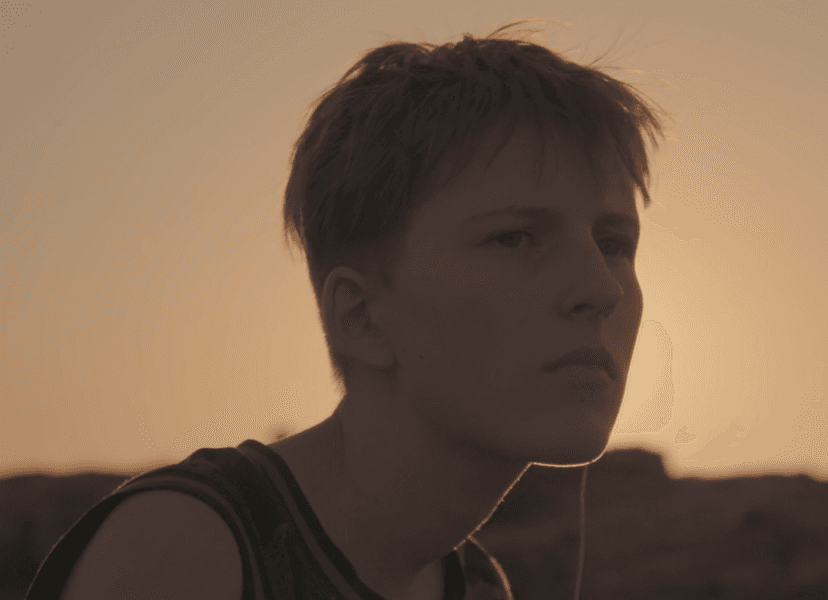
Q. When you learnt Aether was autistic, how did you weave that into your film?
In the early stages, I really didn’t know where the story would end up and went in with an open mind.
At first, I thought we would make a film about an autistic family journeying around Australia that included Aether’s personal journey of coming out as trans and his family’s response to that.
However, I had a hunch that there was potential to tap into something much bigger than a family road-trip adventure.
I did know that Aether was autistic before we started filming. What I didn’t know was that neurodivergent people are more likely to be trans or gender diverse and that there’s a need for young people at this intersection to be supported.
Q. Tell us about Aether - what is he like?
Aether has already answered this one! But I can add that I admire Aether’s care for others, incredible artistic talent, and articulate truth bombs.
Q. How did you work around Aether's sensory needs?
The filming itself didn’t create too many sensory challenges for Aether. We used observational documentary techniques, so we were working within Aether’s usual environment.
Most of our lighting set-ups were using natural light. I was led by Aether day-to-day as to how much energy he had for filming and we would plan each shoot around that, and take breaks as needed.
Usually, in filmmaking, we usually work 10-hour days, but on this project we filmed 4-5 hours at a time. Honestly, this was better for everyone involved.
Q. What did you learn about Aether through your experience that really stood out for you?
He’s a creative powerhouse and an endless fount of ideas. He designed all the animated characters in the film, which he will now tell you he feels are not his best work because his craft has developed since then, but I think they’re awesome. (I think many creatives will relate to Aether’s perfectionism!)
He also worked with myself and the animator to plan what would happen in the animated scenes. He’s very impressive.
Q. What do you think is the biggest takeaway from your film for a teenager with autism?
I hope that an autistic teenager watching this film sees a little bit of themselves in Aether’s story and feels proud of who they are.
Seeing oneself positively represented on screen has immeasurable benefits for our sense of pride in ourselves and feeling of belonging.
What do you think is the biggest takeaway from your film for the general audience?
I hope they come away with more empathy for trans and neurodivergent young people, and know that they don’t have to understand something fully to support and accept a person.
Q. What have you learnt about yourself through this filming experience?
Ask me in a year or so. I don’t think I have enough distance yet to reflect on what I’ve learnt about myself.
Q. In what ways, big or small, do you feel Who I Am supports awareness of autism?
With Who I Am, I was conscious to show the reality of Aether’s experience, and his family’s experiences, rather than sensationalising what it’s like to be autistic. Again this is just one person’s and one family’s story, but I hope it shows that Autistic people are not necessarily like the stereotypes we usually see in media.
How were you supported by the Mable Community Grant to make this film?
The Mable Community Grant provided the means for us to create:
- A study guide for teachers and students to accompany the film in schools
- A discussion guide that can be used in any setting and
- The film’s website, which has many resources for trans neurodivergent young people and those who want to support them.
I decided to apply for it because I felt we were aligned in our shared goal for greater social inclusion.
Q. How has the film been received?
We’ve had so much positive feedback on the film. It has screened at film festivals in New Zealand and Australia, and internationally, and at the screenings Aether, Anthea and myself have been able to attend, there’s always someone (or a few people) who comes up to us at the end and shares that they are trans and neurodivergent, and how thankful they are for the film.
We’re really excited that in June there will be 8 sensory-friendly screenings in cinemas across the country to celebrate Pride month and Autistic Pride Day.
Aether and Anthea will be speaking at the screenings, along with other young people from the trans and Autistic/neurodivergent communities.
About Who I Am
Who I Am is a 23 minute documentary following a transgender teen who is also autistic. Research shows that people who are neurodivergent are more likely to be trans or gender diverse.
After being bullied at school, 14-year-old Charlie (pronouns he/him/it) finally comes out to his mum, setting him on a path of navigating the first steps of his transition – the social transition – and ultimately settling into his identity with a new name Aether.
Meanwhile, his mum Anthea goes on her own journey to embracing her child for all that he is.
The story is told through observational moments, intimate reflections from the whole family, and Aether’s own original animated characters, The Fallens, coming to life.
Read Aether’s interview here. You can find more details about the film screenings on the Who I Am website. If you prefer to watch at home, you can stream it on 10play.