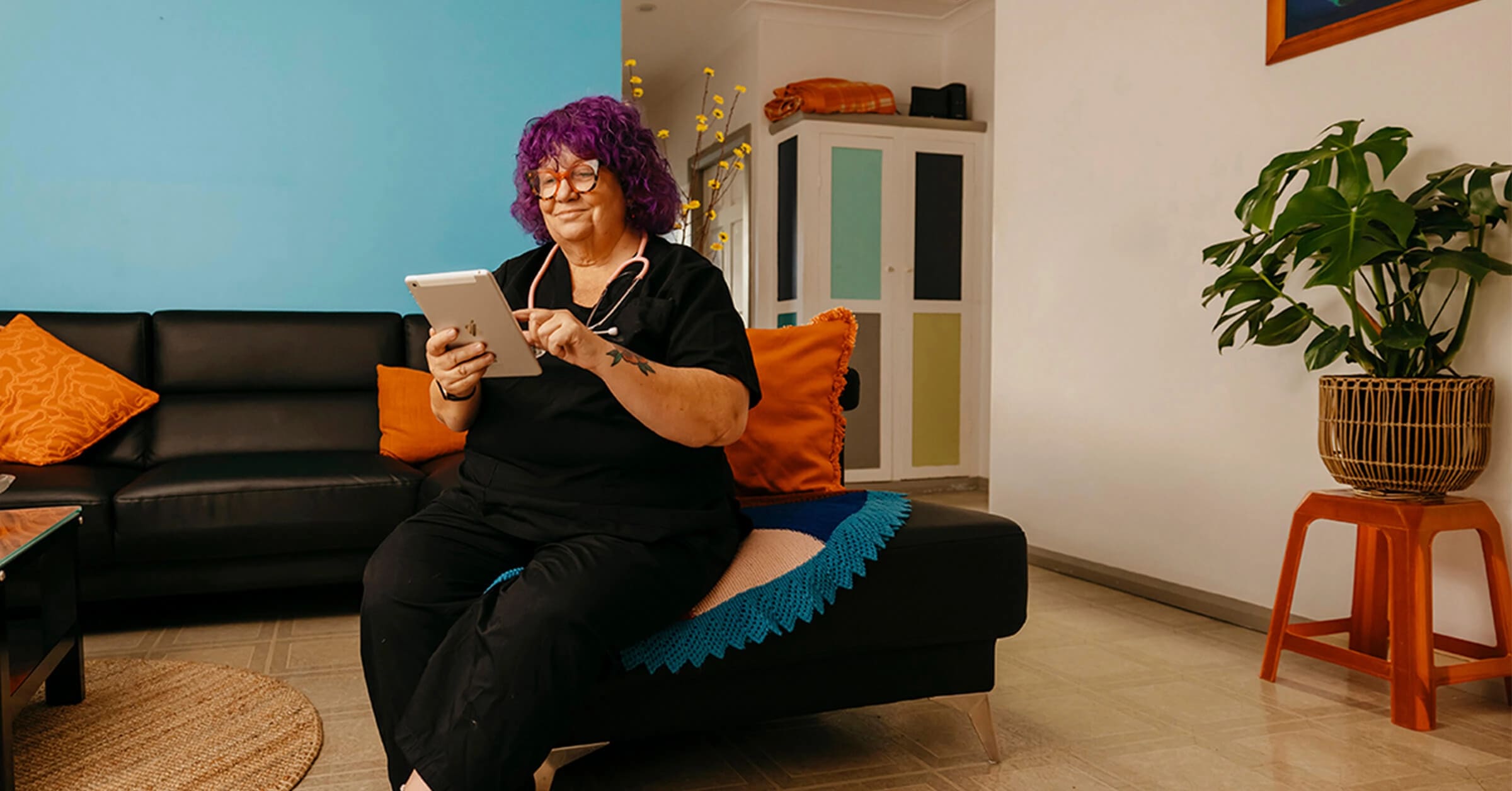
Self-managing my NDIS plan is very empowering for me. I get to choose the supports that work for my disability, personality and goals.
Building a team of support workers who understand my needs greatly enhances my overall wellbeing.
Choosing support workers who align with my values and goals creates a more positive and productive working relationship.
As an autistic adult and a peer mentor to autistic adults, I know the importance of having neuro-affirming support.
Self-management gives me the flexibility to be innovative and precise about what support I need.
This is very important to me.
As a self-managed NDIS participant, I also have the opportunity to negotiate hourly rates with independent support workers, using platforms such as Mable.
When I saw the updated NDIS self-management guide come out this week, I was happy to see genuine improvements in the communication of the self-management guidelines.
For a start, it’s more specific.
My autistic brain appreciates this. We need details.
Details reduce anxiety and give us more confidence to make the right decisions.
When we understand the specifics of a situation, we gain a deeper understanding that allows us to make more informed choices.
For example, on page 16 it mentions a story of someone who is accessing more individual sessions using their NDIS funding by engaging a personal trainer some of the time instead of using those funds exclusively with a physiotherapist.
This information helps us understand that we may also be able to do this with our funding.
The result is we have additional choice and control over how we use our NDIS funding.
It will allow participants to stretch their funds further and potentially provide more relevant and effective support.
Overall, the new guide attempts to illustrate that it is less scary to be self-managed than you might imagine, as there are pages that discuss how you can ease yourself into self-management by self-managing part of your plan to begin with.
One page of the guide has points to consider when deciding if you would be suited to self-managing.
Considerations such as being good at shopping around for the best prices for supports and being able to identify good quality supports are mentioned.
It’s also something you can learn over time.
When I first started self-managing and looking for support workers, it took me a while to become good at booking appropriate independent support workers.
I learnt a lot from reading on Mable about how to choose a support worker and also from meet and greets with support workers.
The first support session was also a good way to see if we were the right match.
The new guide also covers how you can learn to self-manage your NDIS plan.
Asking peers who self-manage for tips, taking courses about self-managing and getting assistance from support coordinators are examples that are provided.
On page 14 there are specific examples of how you can use your funding to support you in self-managing your NDIS plan.
Again, these specifics are great because it gives us the confidence and support to go ahead and enquire about these supports, without being concerned about making a mistake in our decision-making process.
A key change to the ‘Can you buy it?’ checklist (page 15) is the change from the word ‘goals’ to ‘needs’. Instead of asking if this support meets your goals, it asks instead about it meeting your needs.
The guideline shows the importance of flexibility as it mentions you can change your supports if it would better suit your needs. The guide encourages trying new things also.
Overall, the language in the NDIS self-management guide is less ‘government speak’ and more ‘real life’ speak. It feels more realistic, detailed and easier to understand.
Self-management does come with more responsibility and we need to keep good records and make our own decisions, although as the guide mentions, we can ask peers, family and friends for assistance.
We can undertake training programs to become more confident and competent self-managers and use our NDIS funds to pay for it.
I’m a person who loves keeping accurate and neat records and I love understanding and applying rules.
I’ve become an ‘NDIS nerd’ and want to share what I’ve learnt about self-managing with others, so I will be creating a self-management online program as part of my offerings at Autie Talk.
If you think self-management may be for you, I encourage you to download ‘Your Guide to Self-Management’ on the NDIS website and take your time to read or listen to it.
Whatever you decide, I wish you all the best in your journey to finding the supports and the way of managing them that works for you.