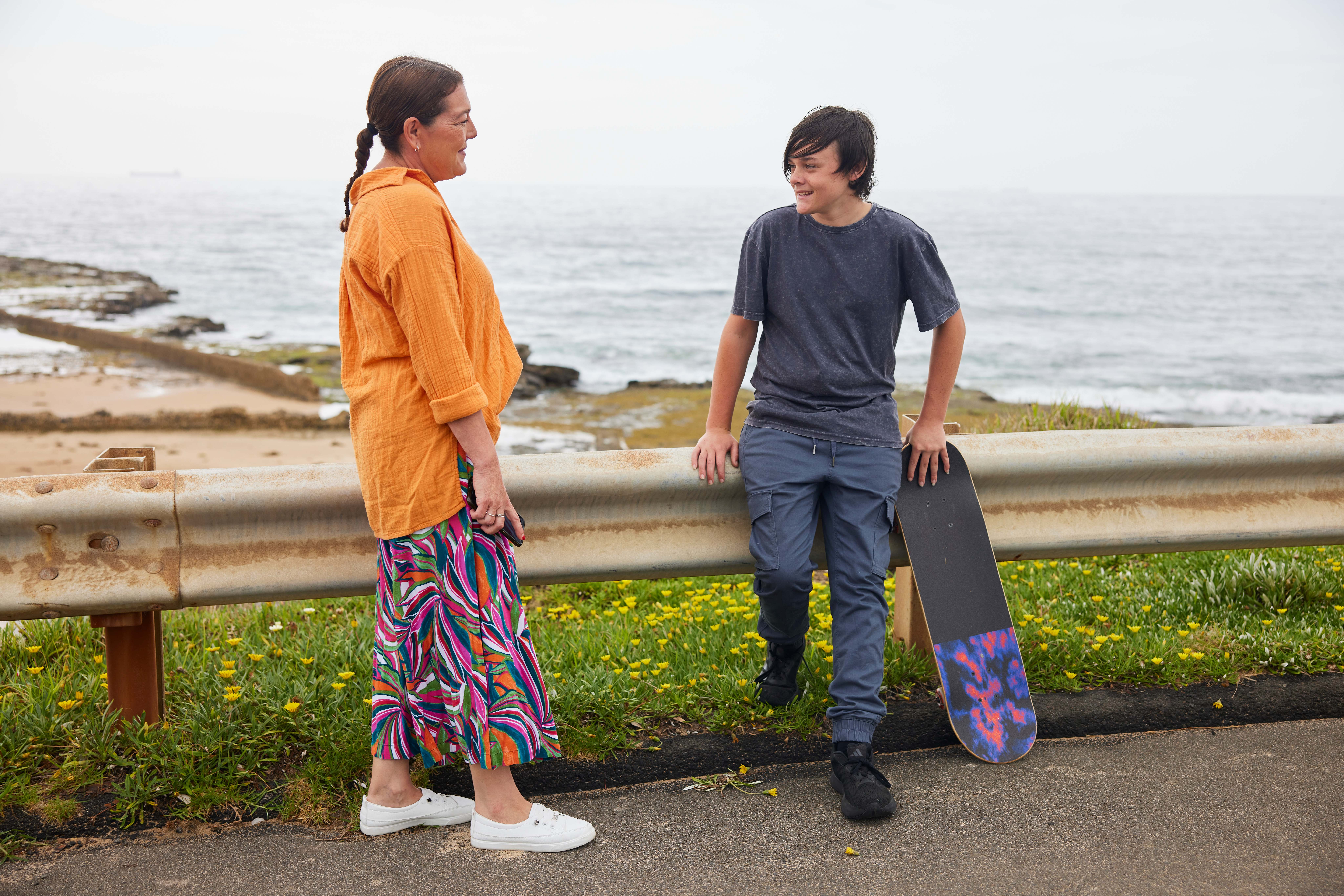
Why Lisa moved to support work after 25 years in hairdressing

Support Workers

Last updated

6 Feb 2020

Reading time

3 min read

Share

On Mable, there are thousands of independent support people offering services to clients in innovative, creative and inspiring ways. We spoke to independent support worker Lisa to learn why she made the switch from a 25-year career in hairdressing to support work. We also talked about the surprising similarities between the two careers!

Meet Lisa

Lisa grew up on a small hobby farm an hour east of Melbourne. In her spare time, she enjoys upcycling old furniture, cooking in the kitchen, camping and hanging out with her family and nieces.

From hairdresser to support worker

Deciding school wasn’t for her, Lisa left when she was 16 and was a qualified hairdresser by 18. She immediately loved it! When she had her first daughter, she enjoyed the flexibility of running her home-based salon, which gave her the ability to juggle the responsibilities of being a single parent and also the sole breadwinner.

Although enjoying her career in hairdressing, after 25 years, Lisa decided it was time for a career change.

“I found the last few years hard on my body and I also felt a little isolated working from home and not enjoying it as much. I needed a change in my life,” she said.

Initially, Lisa found it difficult to decide what she wanted to do instead of hairdressing.

“It took me so long to decide what I wanted to do and how to start to change my career and passion in life because hairdressing was all I knew from 16,” said Lisa.

However, Lisa knew what her passions were and wanted a new career where her passions could be used.

"I knew I loved people, and I found I did a lot of psychology in the salon with clients...I wanted to do something that would give me as much joy and job satisfaction," she said.

Lisa eventually decided to enrol in a Cert III in Individual Support and quickly fell in love with it: 

“Once I started, I pretty much knew after one month that I had found my new passion in life. I loved the study and I surprised myself at how well I went and when it came to do placement, I loved it. I just couldn’t wait to meet new people and support them in whatever they needed me to,” Lisa said.

A second career in support

Lisa heard about Mable from her friends and decided to give it a go. Since signing up to Mable, she has enjoyed being her boss and running her own small business and has had many memorable sessions. 

“Recently, I had a shift where I met a young lady who just wanted a companion and someone to support her with mental health. We had an awesome time together,” she said.

Some surprising similarities

In her new career, Lisa has found many similarities between support work and hairdressing, saying both roles are alike because they involve caring for people, listening, giving sound advice and sharing experiences.

Lisa says both roles also feature job satisfaction and an overall feeling of making people happy. 

She is excited about what the future on Mable will bring, saying she is looking forward to meeting more and more clients and supporting them.”

You might be interested in

Disabled mums are the quiet supermums
As the water trickled over the rocks and my kids explored the bush, their laughter mingling with birdsong, I sat quietly on the wooden seat, taking it all in. The peace, the joy - but also something else. My eyes welled up just as my independent support worker glanced at me. She slipped an arm around me and gave a gentle squeeze. I didn't need to explain what I was feeling but she already knew. That feeling is something that I think every parent living with a disability needs to hear and embrace. A different kind of angst Mum - and dad - guilt is almost synonymous with parenting these days. We worry we're not doing enough, not being enough; that there's never enough time, money, or energy. But when you're parenting with disability, that feeling cuts deeper. It's the sting when you can't do something for, or with, your kids. Like driving them to a birthday party, kicking a soccer ball in the backyard. It's crying quietly in the kitchen when disability and parenthood all feels too much.
Independent Thoughts: Melissa and Simone
Independent Thoughts digs deeper into what it really means to live on your terms, sharing insights into life for people with disability and older Australians. We invite guests with lived experience to share their perspectives in an open dialogue. From casual chats to asking some of life's biggest questions, Independent Thoughts covers it all. Independent Thoughts is an invitation to join us as we challenge the status quo, shatter stereotypes, and redefine independence – one open-hearted conversation at a time. In this episode, we meet Simone, who manages support for her dad, Con, through Mable. She speaks with host and Clinical Psychologist, Melissa Levi . Finding the right support Dogs, flowers and a veggie garden. These are three things that bring Con joy, according to his daughter, Simone. But as he got older, it became physically harder for him to stay connected to the parts of life he loved. When Con and Simone felt it was time to begin looking for help at home, it was import
NDIS reforms announced: What we know so far
On 22 April 2026, Health Minister Mark Butler announced major reforms to the National Disability Insurance Scheme (NDIS). The changes have been described as a 'reset' with the intention to refocus the scheme, reduce spending and ensure long-term sustainability. While the reforms are wide-ranging, they will not take effect immediately and will be introduced gradually over time. The Government will introduce the National Disability Insurance Scheme Amendment (Securing the NDIS for Future Generations) Bill next month, then there will be a lot of debate and community consultation before we see any changes take effect. Here's an explainer of the announcement and the key takeaways. Why the 'reset'? The NDIS was established to support people in Australia living with 'permanent and significant disability' 13 years ago. Since then, its rapid growth has seen the scheme expand much faster than originally forecast. Spending increasing by 10-14 per cent per year. Today, there are more than 75