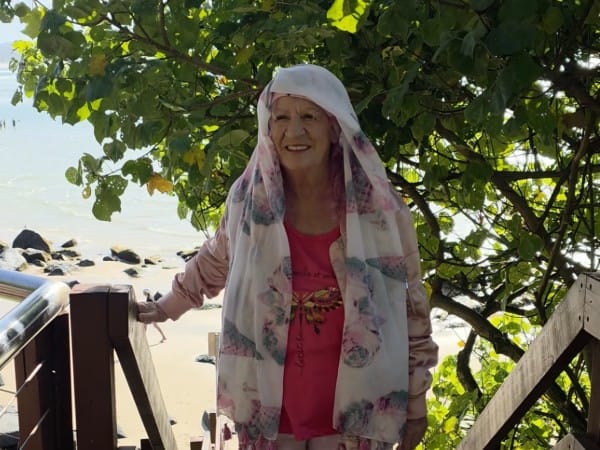
Supporting the community: Why two experienced nurses are providing support on Mable

Support Workers

Last updated

8 May 2018

Reading time

3 min read

Share

There’s no doubt that being a nurse means taking up one of the toughest jobs in the country. To celebrate International Nurses’ Day on May 12, we want to take time to appreciate the 260,000 nurses across Australia. To get a glimpse of the services nurses provide through Mable, we spoke to Kelli and Jade and asked them why they’re making the change to community nursing.

Jade’s story

“I'm really excited to support the aged care community – that’s why I signed up to Mable." After 30 years’ nursing experience and having worked closely in haematology-oncology, Jade realised she wanted to make a career change. After a quick search, she soon found Mable.

“Mable really appealed to me because it’s a completely unique support system and is much more flexible than traditional services. In the past, I’ve worked casually with home care providers but I wanted more control. That’s why I signed up to Mable. This way, I can be my own boss. I'm passionate about creating new relationships and supporting those who need assistance to live safely and happily in their own homes”.

Jade studied in Sydney and Perth to receive her nursing qualifications and began applying her skills at the Royal Perth Hospital, which meant she gained years of experience in aged care. Jade soon moved onto care of a different kind: “I started providing home care not only because it's a sustainable, affordable alternative to residential care, but because it is so rewarding to make a difference in someone's life.” Jade gained most of her nursing experience at the Royal Perth Hospital and has since completed courses on dementia care and wound care.

“Clients can expect quality nursing care from me. I’m reliable and am more than happy to provide urgent care for clients on Mable.”

Kelli’s story

As soon as Kelli began training to be a Registered Nurse (RN), she knew she wanted to specialise in the ICU and theatre. “It was an area I always wanted to go into and after 20 years, I was still working in theatre.” Kelli is based in the Mornington Peninsula, Victoria and has been working as a nurse in hospitals and nursing homes since 1994. After recently taking a break from work to care for her 5-year-old son, Kelli is keen to get back into the workforce – but in a much more flexible way.

“I started thinking about how I could use my skills for community care and home care because I wanted something to fit better with my lifestyle.”

That’s when she discovered Mable. Now, Kelli is excited to apply her 20 years of experience in wound, catheter, asthma and dementia care and medication management to support those in her local area.“I’m more than ready to provide support to people living with disabilities and for those seeking aged care. This is the direction I’m hoping to follow for the rest of my career.” 

Mable is home to a wide range of support workers offering different levels of support. If you’re searching for support from an experienced Registered Nurse, Mable has what you’re looking for. Start searching for the right support worker.

You might be interested in

NDIS reforms announced: What we know so far
We know recent news about NDIS reforms might feel heavy. For many of you, your participants, and your loved ones, hearing about potential service caps or changes to funding for social and community participation is deeply stressful. We want to start by saying: we hear you, and we are here for you. Our commitment to you remains unchanged While the government works through these changes, we want you to know Mable's business model is not changing. Our platform continues to be a place where you can find and book independent support workers who best meet your needs or those of your clients. While we may make a few small technical updates behind the scenes, your ability to use Mable remains exactly as it is today. We're your partner and advocate During this transition, we're dedicated to supporting safe, transparent connections. We are actively advocating for person-centred approaches to care that respect your choice and control, and we'll keep helping our community understand what these r
Disabled mums are the quiet supermums
As the water trickled over the rocks and my kids explored the bush, their laughter mingling with birdsong, I sat quietly on the wooden seat, taking it all in. The peace, the joy - but also something else. My eyes welled up just as my independent support worker glanced at me. She slipped an arm around me and gave a gentle squeeze. I didn't need to explain what I was feeling but she already knew. That feeling is something that I think every parent living with a disability needs to hear and embrace. A different kind of angst Mum - and dad - guilt is almost synonymous with parenting these days. We worry we're not doing enough, not being enough; that there's never enough time, money, or energy. But when you're parenting with disability, that feeling cuts deeper. It's the sting when you can't do something for, or with, your kids. Like driving them to a birthday party, kicking a soccer ball in the backyard. It's crying quietly in the kitchen when disability and parenthood all feels too much.
Independent Thoughts: Melissa and Simone
Independent Thoughts digs deeper into what it really means to live on your terms, sharing insights into life for people with disability and older Australians. We invite guests with lived experience to share their perspectives in an open dialogue. From casual chats to asking some of life's biggest questions, Independent Thoughts covers it all. Independent Thoughts is an invitation to join us as we challenge the status quo, shatter stereotypes, and redefine independence – one open-hearted conversation at a time. In this episode, we meet Simone, who manages support for her dad, Con, through Mable. She speaks with host and Clinical Psychologist, Melissa Levi . Finding the right support Dogs, flowers and a veggie garden. These are three things that bring Con joy, according to his daughter, Simone. But as he got older, it became physically harder for him to stay connected to the parts of life he loved. When Con and Simone felt it was time to begin looking for help at home, it was import