Basketball, photography and more: How Charlie’s life ‘restarted’ through Mable

Disability

Last updated

22 Nov 2023

Reading time

3 min read

Share

Charlie is 43-years-old and identifies as a non-binary person. They are neuro-diverse. Charlie has been a Mable client for 7 months or so. In that time, the social support they have received has been “nothing but positive and life-affirming”.

Charlie found Mable through their support coordinator. “I joined Mable because I could choose who I wanted to work with.”

They add, “I wanted a support worker who had similar interests and life experiences, so that my needs would be better met, my goals could be achieved and we could have fun along the way!”

Support for the things Charlie loves

“People say life starts at 40, for me it has ‘restarted’ at 43,” Charlie says.

Charlie discovered their passion for ball sports and skateboarding, and found their Mable support worker who goes with them for the sessions. “I’m now playing in an amateur league. I’m also going to cardio tennis once a week and shooting hoops with my support workers. And I’m so proud of myself!” they say.
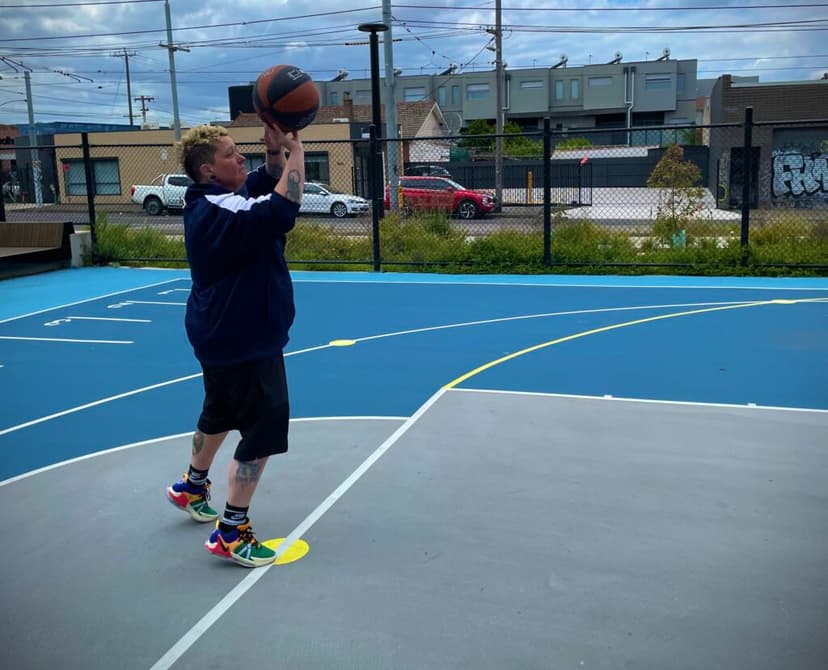
For Charlie, who lives with mental health issues, the “rewards are amazing”. “The endorphins and the knock on effect is helping the meds work even better and feeding my self-confidence.”

Charlie also loves photography. “I’m a photographer and I’ve taken steps to start my own business selling my art. My support worker encourages me to follow my ambitions and nourish my strengths. They also help me venture out into the queer community here in Naarm (Melbourne) and the community at large in a way that suits me.”

Finding independence with Mable

Charlie is working on gaining confidence to do the things they find difficult to do on their own, and to become independent.

“Independence to me is being able to get places on my own with as little anxiety as possible, making new friends, pursuing my interests and engaging with others with the same interests,” Charlie says.

Having support means Charlie is also able to be a better carer for their mum. “And my workers support me when I’m having a rough time of it. This helps me look after myself so I can continue to help mum as she ages.”

Charlie’s vision for people with disability

“I want people with invisible disability to be seen, heard and protected,” Charlie says.

They add, “I want them not to be exploited, left out, teased. I want them to receive the support they need right from the start, so we’re not left behind in any way as children or as adults.”

“Give us a chance, we might do things a little differently, but our ability to think outside the box can be so valuable to society.

“We are capable of extraordinary things, especially those of us who are neurodiverse. I’d love for the education system to catch up with those who learn in different ways.

Charlie adds, “We just want to be understood and accepted for our differences, and have them celebrated, not maligned.”

Also read
You might be interested in

Disabled mums are the quiet supermums
As the water trickled over the rocks and my kids explored the bush, their laughter mingling with birdsong, I sat quietly on the wooden seat, taking it all in. The peace, the joy - but also something else. My eyes welled up just as my independent support worker glanced at me. She slipped an arm around me and gave a gentle squeeze. I didn't need to explain what I was feeling but she already knew. That feeling is something that I think every parent living with a disability needs to hear and embrace. A different kind of angst Mum - and dad - guilt is almost synonymous with parenting these days. We worry we're not doing enough, not being enough; that there's never enough time, money, or energy. But when you're parenting with disability, that feeling cuts deeper. It's the sting when you can't do something for, or with, your kids. Like driving them to a birthday party, kicking a soccer ball in the backyard. It's crying quietly in the kitchen when disability and parenthood all feels too much.
Independent Thoughts: Melissa and Simone
Independent Thoughts digs deeper into what it really means to live on your terms, sharing insights into life for people with disability and older Australians. We invite guests with lived experience to share their perspectives in an open dialogue. From casual chats to asking some of life's biggest questions, Independent Thoughts covers it all. Independent Thoughts is an invitation to join us as we challenge the status quo, shatter stereotypes, and redefine independence – one open-hearted conversation at a time. In this episode, we meet Simone, who manages support for her dad, Con, through Mable. She speaks with host and Clinical Psychologist, Melissa Levi . Finding the right support Dogs, flowers and a veggie garden. These are three things that bring Con joy, according to his daughter, Simone. But as he got older, it became physically harder for him to stay connected to the parts of life he loved. When Con and Simone felt it was time to begin looking for help at home, it was import
NDIS reforms announced: What we know so far
On 22 April 2026, Health Minister Mark Butler announced major reforms to the National Disability Insurance Scheme (NDIS). The changes have been described as a 'reset' with the intention to refocus the scheme, reduce spending and ensure long-term sustainability. While the reforms are wide-ranging, they will not take effect immediately and will be introduced gradually over time. The Government will introduce the National Disability Insurance Scheme Amendment (Securing the NDIS for Future Generations) Bill next month, then there will be a lot of debate and community consultation before we see any changes take effect. Here's an explainer of the announcement and the key takeaways. Why the 'reset'? The NDIS was established to support people in Australia living with 'permanent and significant disability' 13 years ago. Since then, its rapid growth has seen the scheme expand much faster than originally forecast. Spending increasing by 10-14 per cent per year. Today, there are more than 75