In a world where disability is often shrouded in stigma, Tina Fielding and Leigh Creighton want to shine a light on their positive experiences.
While the pair don’t know each other, both live with Down syndrome, a genetic condition caused by an extra copy of chromosome 21 in the body’s cells.
In Australia, it’s estimated that 1 in 1,100 babies are born with Down syndrome—and like a lot of disabilities, it’s often misunderstood.
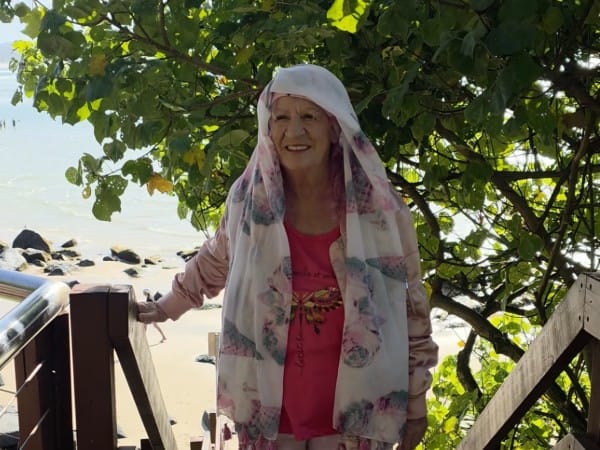
Meet Tina: actor, writer, LGBTQIA+ advocate

Thankfully, writer and actor Tina says her loved ones have always supported her and her goals.
“I’ve got the best family and friends, and amazing parents,” Tina says.
“There was nothing negative about my Down syndrome. They support me and love me dearly.”
Unfortunately, not everyone has always been so understanding. At school, for example, Tina says she experienced bullying and name-calling.
“Some people even tried to fight me because I was different,” Tina says. But things are better now as an adult.
While many employers have misconceptions and negative assumptions about the disabled community, Tina says she’s had a lot of positive experiences in the workplace, including working for Woolworths at a young age.
And for the past 15 years, Tina has worked at Bunnings, a role that has been really supportive for her, especially as she explores her creative pursuits.
“I really like doing my work,” Tina says. “I’ve got really good friends at work and I’m happy about that.” Tina loves that her job is flexible, allowing her to take time off to write and act in her award-winning film, Sparkles.
“I love writing, so I decided to write a script,” Tina says.
Sparkles is a 2021 short film about a 30-something woman with Down syndrome who leaves her past behind in favour of the big city. Along the way, she makes friends with an outback drag queen.
The film aims to teach audiences to not be afraid, and to celebrate who they are. It’s something Tina advocates for in her work, especially as a member of both the disabled and LGBTQIA+ community. Tina says coming out as a lesbian had a huge impact on her identity. It broke society’s expectations of disabled people. She says she’s been welcomed with open arms by the community and her family.
“It was easy to come out,” she says. “I told my family I was gay at Christmas one year. My brother was like ‘yeah, we all know, we can tell’.”
Meet Leigh: Entrepreneur and public speaker
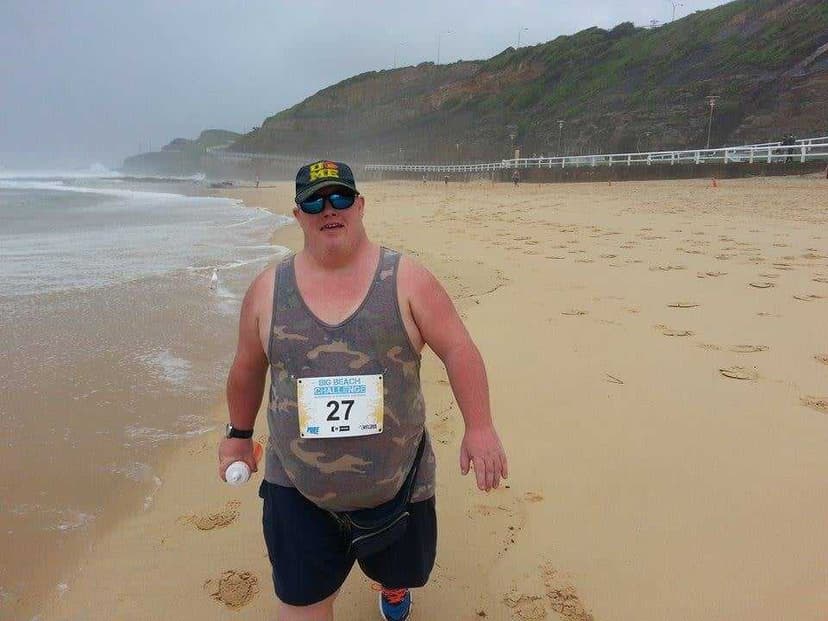
Entrepreneur Leigh feels positive about his disability, but says there are many things that need to change for people with Down syndrome and the wider disabled community. “I faced discrimination and bullying in the community, at school, and in employment,” he says. “I wish the world knew we can be who we want to be, fall in love, spread love, and deserve to have full education and employment opportunities, where our rights and voices are upheld.” According to Down Syndrome Australia, only 34% of people with Down syndrome over the age of 25 have a paid job. However, many of those with Down syndrome are working for Australian Disability Enterprises, where they are paid well below minimum wage, as little as $2.37 per hour. People with Down syndrome also experience institutionalisation and segregation, making life all the more challenging and stigmatising. It’s this stigma that causes an estimated 90% of expecting parents choosing to terminate a pregnancy if there is a high chance of Down syndrome.
Around 49% of families even say they felt pressure from healthcare providers to end their pregnancies.
Leigh says it’s upsetting to see poor attitudes around Down syndrome and disability, especially when his life has been filled with so much joy. “Living with Down syndrome has never stopped me. I can do anything that anyone else can do — just at my own pace.” Leigh says his experiences have given him an excellent sense of humour; something that’s brought him and those around him, a lot of joy. “I love my sense of humour. It’s definitely the best part—being cheeky.” Alongside his love for travel, karaoke, bushwalking, horror movies and power-lifting, Leigh’s career is something that lights up his life. He works as an entertainer and a public speaker, and dreams of one day becoming an author. He also hopes to someday speak at the United Nations and do a Ted X Talk to help make the world a better place.
“I’d like to become a world-known human rights motivational public speaker,” Leigh says. “It would also be good to MC corporate national and international events, and be a wedding MC.” Both Tina and Leigh hope to use their lived experience to create change and encourage people to be their authentic selves, without stigma.
“It doesn’t matter what people think,” Tina says.
“Just be you, love yourself, and accept yourself. You can be disabled, you can be part of the LGBTQIA+ community—just live your life.”
About the author
Zoe Simmons is a disabled journalist, copywriter, speaker, author and advocate. She writes to make the world a better place. You can find out more about Zoe on her website, or follow her on Facebook, Instagram, Twitter, LinkedIn or TikTok.