
In this guide:
As your child grows into their teenage years and becomes a young adult, developing practical life skills becomes essential for their independence.
The journey will look different for every young person with disability. Small steps that are practised regularly can lead to meaningful progress that builds their confidence and opens up new opportunities.
Learning life skills empowers young people to take part more actively in community life and create the future they want.
Why life skills are important for your child's independence
Learning practical skills may help young people with disability move into adulthood with more confidence. Each new skill, whether it’s catching a bus by themselves or preparing a meal, helps to build their self-esteem and prove what’s really possible.
It can help to build greater independence and confidence when young people learn to manage more aspects of daily living by themselves.
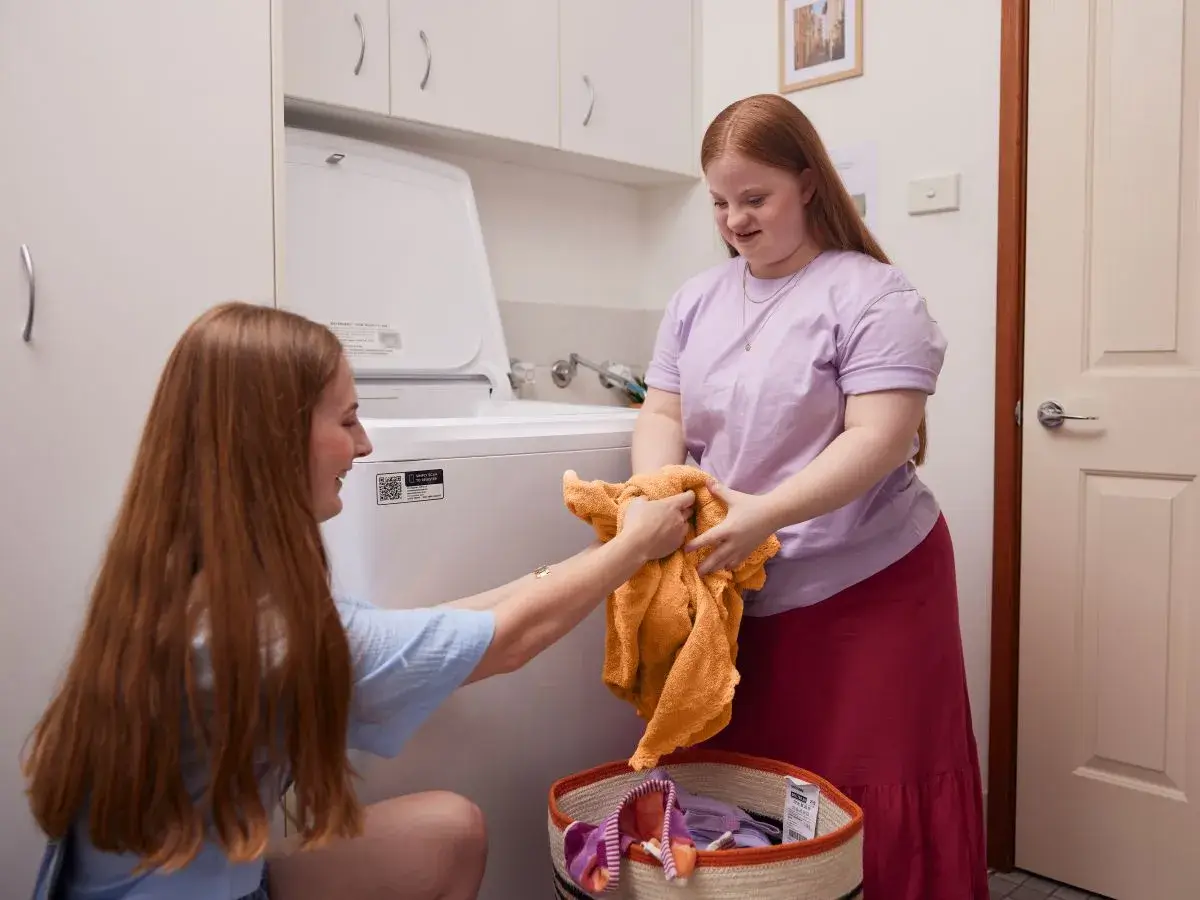
The key is taking it one step at a time, focusing on their strengths and capabilities rather than any limitations. Parents, carers and support workers play an important role in this development, creating opportunities to practise and build skills in safe and supportive environments.
Some useful tips for teaching life skills
- Break up skills into small, achievable steps as this makes learning less overwhelming and success much more likely.
- Try using visual supports and checklists to reinforce each step – many young people respond well to clear, visual instructions that they can refer back to.
- Practice in real-world settings whenever possible. E.g. learning to order food can be practised best in cafes or restaurants, and public transport skills develop faster through real journeys.
- Model the behaviours you want to teach the young person by demonstrating each step, before asking your young person to try.
- Make learning fun by connecting skills to their interests and hobbies – if they love a particular restaurant, use that as motivation for learning to catch the bus to get there independently.
Consider working with allied health professionals like occupational therapists or speech pathologists, who can provide specialised strategies designed for your young person’s needs.
Important life skills for daily living
Let’s look at some of the most common and useful life skills your young person should learn.
Personal care
- Personal care is the foundation of independence.
- Help to establish daily hygiene habits that they can manage themselves.
- Teach nutrition basics and healthy eating choices, explaining how different foods fuel their body.
Skills for connecting with the community
Public transport and travel
- Start by learning familiar bus and train routes together, then gradually step back your support.
- Teach timetable reading and journey planning using apps or printed schedules.
- For some young people, rideshare apps or taxis may be a good alternative – practise using these services together first.
Road safety
- Road safety is extremely important for safe community access.
- Make sure your young person understands pedestrian rules and can cross streets safely.
- Build their awareness of traffic and surroundings through regular chats and practice.
- Consider taking road safety courses together for more structured learning.
Eating out
- Practise ordering food at restaurants and cafes, starting with places your child knows and likes.
- Role-play talking to the wait staff, including asking questions about the menu or asking for the bill.
Social interaction
- Help your young person practice introducing themself and making conversation.
- Talk about what they’re comfortable with when it comes to personal space and boundaries, as this isn’t always obvious.
- Work on reading social cues and body language together, and talk through what different expressions or gestures might mean.
Ready to take the next step?
Every skill learned can help to increase a young person’s independence and confidence. Remember to focus on their individual strengths and interests, as this will motivate them and make learning more enjoyable. Just take it one step at a time, celebrating each achievement along the way.
Independent support workers found through the Mable platform can help assist with life skills development, providing coaching and support as your young person practises new abilities. Together, you can build a pathway towards greater independence and the life your young person wants to live.
This article and any of our articles linked to it provides our summary of this topic and terms and is intended for general purposes only.