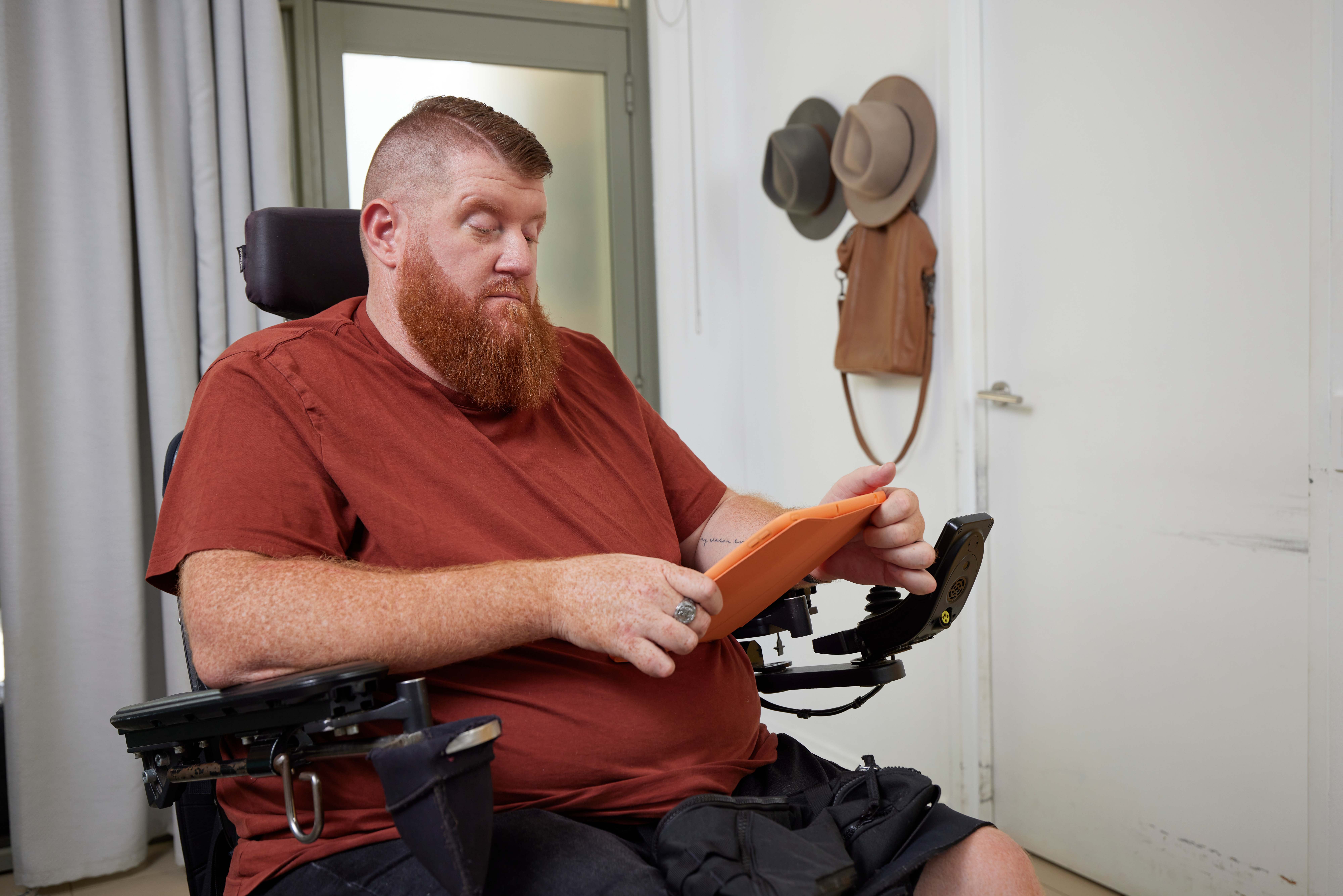
For Kat, a good support worker “has a happy, positive manner and shows respect”. She likes support workers to follow instructions, and appreciates safe driving.
Kat says, “They have to be gentle when they drive. And I also like support workers who are good people, they are helpful, such as carrying bags for me after shopping.”
Kat has found the support workers she matches best with, on Mable. She has been a Mable client for more than 2 years now.
Signing up on Mable
Kat’s first step after she signed up on Mable was to post a job ad. In it, she outlined the different kinds of support she needed.
“I got so many responses!” Kat recalls. “For one of my job ads, I had up to 30 people interested and I made sure I responded to all of them. I went to all their profiles and checked their background and experience and chose the ones I wanted to work with.”
Support comes in different forms
Kat gets support for household cleaning, cooking and transport to and from appointments.
For Kat, who lives with asthma and hay fever, keeping a clean house is critical. While she uses a robot vacuum daily, she books a support worker weekly for deep cleaning. “They get into the corners and move the furniture to remove the dust, which really helps me,” she says.
Kat is also a foodie and to make sure she eats healthy as often as possible, she enjoys support for meal preparation.
“My support worker takes me shopping for the ingredients. Then we come home and cook the recipe,” she says.
“Sometimes they help me prepare the food, which I cook in my air fryer. Other times, they cook for me. They understand my nutritional needs and they are really good cooks.”
Kat also engages support workers to help her get to appointments, such as her specialists, physio and an exercise physiologist.
Support to do things that bring joy
Aside from everyday tasks, Kat’s workers help her with the things she enjoys doing, like exercising, swimming or going for a walk along the beach.
Once a month, she goes to a community group where everyone chats about community safety, health matters, among other things.
Getting support means Kat can stay independent and just spend quality time with her family, which means she can separate family from support.
Building long-term support relationships
For Kat, the human connection is important. “Sometimes, my support workers tell me about their own experiences. It’s interesting for me to know and learn about other people. I feel blessed that they help me and others. It’s so good to find workers from different backgrounds and nationalities. We all work together and bond together in friendship.”
Building a support team on Mable
For Kat, it’s important to have a backup support worker in case someone is sick or goes on holidays.
Following the pandemic, one of her support workers travelled overseas, so Kat searched for new workers to provide services in the meantime.
Kat also likes to be able to find support workers to help if she has something specific to do, and searches the profiles to find workers who are experienced in it.
The search is ongoing, according to Kat. “I’m always searching for support workers. School holidays are coming up and some go on holidays. It’s good to be able to keep searching and meeting new people.”
Benefits of booking support on Mable
Mable is an online platform that connects clients looking for aged care and disability support, with independent support workers.
By booking and managing support through Mable:
- You have choice and control over who supports you, when and where they support you, and how much you pay for the support
- You’re safeguarded by Mable’s strict approval and verification process, and the high-level suite of insurances arranged by Mable on behalf of support workers.
Find your kind of independence on Mable. Start searching for support workers or post a job ad today to build your support team.
Editor’s note: Names have been changed