
In this guide:
We all need people around us. Friends, family and connections who support us and enrich our lives. For people with disability, building these networks is so important and can turn isolation into belonging and promote development of independence.
Circles of support bring together people who care, creating a committed group focused on helping a person with disability achieve their goals, and live the life they want.
What exactly is a circle of support?
A circle of support is a voluntary group of unpaid people who come together around a person with disability. This places the person with disability at the centre of the circle, with their dreams, needs and preferences guiding everything the circle does.
Circles of support are different to formal support services as they focus on building meaningful relationships and community connections rather than delivering specific care tasks. Members might include family, friends, neighbours, colleagues or community members who care about the person’s wellbeing and goals.
These circles are designed to complement professional support services. Paid support workers provide essential practical help and care, but other circles of support offer diverse relationships with different perspectives and connections that can really help someone integrate and find belonging in their community.
How circles of support can help you and your child
Sadly, social isolation affects many people with disability, limiting their opportunities for connection and growth.
A circle can help to combat this isolation by creating networks of care and support by bringing people with different skills, experiences and ideas together. This can help you come up with unique solutions and opportunities that you might not have found. Whether it’s finding a job, taking part in community activities or navigating life transitions, having different perspectives makes achieving goals much easier.
Circles can also provide a crucial safety net. They create consistent support that goes beyond individual relationships, which becomes important as parents and primary carers age. You can also create a succession plan to maintain strong connections and support throughout a person’s life.
Most importantly, circles help to build confidence and independence. When you’re surrounded by people who believe in your potential and create opportunities with and for you, you feel empowered to try new things and to take steps towards your goals.
Understanding the 4 circles of support
Canadian disability advocate Judith Snow established the now widely used concept of circles of support. Inspired by her own experiences in life as a person with disability, these 4 relationship circles form to help a person with disability achieve their goals and live a balanced and supported life.
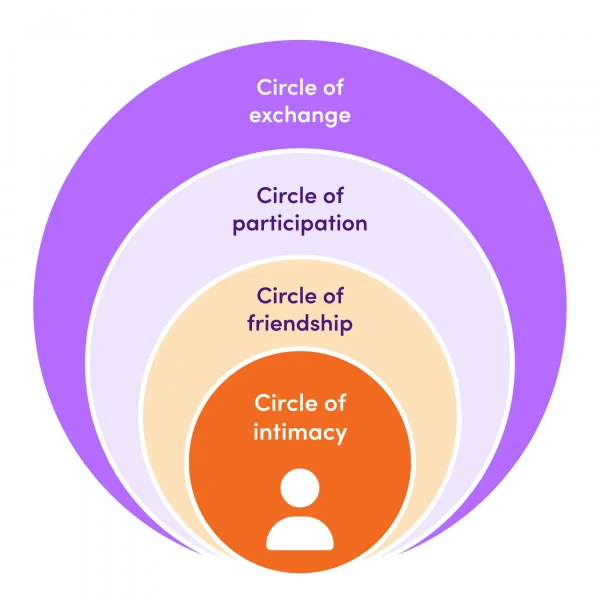
1. The Intimacy Circle
2. The Friendship Circle
3. The Participation Circle
4. The Exchange Circle
This circle includes paid workers and professionals like doctors, therapists, support workers and other service providers. These relationships are professional, but they still contribute to someone’s overall support network.
Your goal should be to strengthen circles one, 2 and 3 by building unpaid, genuine relationships that create a real connection.
Getting started with building your own circle
- Map current relationships: Who’s already in their life? Think about family members, neighbours, a faith community, club members, teachers or colleagues. You might be surprised by how many potential circle members already exist.
- Invite people: When you’re ready, invite people and be clear about what circles of support involve and what you’re asking. Send a written invitation explaining the idea, the time commitment and how often the circle will meet to help people understand the request and respond thoughtfully.
- Arrange meetings: Most circles meet monthly or quarterly, depending on needs and goals. Put some practical structures in place early, like assigning someone to take notes, scheduling meetings and sending reminders.
These simple things keep the circle running smoothly. For each meeting you should have a clear agenda, set action items, assign responsibilities and always celebrate achievements, big or small.
Are you ready to take the next step?
Circles of support can really enrich your life and the person with disability’s life. They transform an experience of isolation to one of belonging, creating a network that celebrates and supports someone.
Ready to take the first step? Map the relationships already in place and reach out to potential circle members.
Through Mable, you’ll find resources to support your journey and connect you with experienced independent support workers who understand the importance of community and connection.
This article and any of our articles linked to it provides our summary of this topic and terms and is intended for general purposes only.