

In this guide:
A note on language: At Mable, we use ‘identity-first’ language when referring to autism and autistic people. We’ve made this decision based on feedback from our community. We understand different people have different preferences, and we recognise and respect every individual’s right to choose how their identity is described.
Speech and language therapy (SLT) for autism does more than teach words. It supports connection, emotional wellbeing and independence.
For families navigating autism support, understanding how to help your child communicate more confidently is often at the heart of the journey.
Speech therapy is tailored to your child’s unique ways of expressing themselves, whether they’re verbal, non-verbal or somewhere in between.
And while clinical sessions with a therapist are often essential, it’s also important you practise those skills at home, school and in the community with help from support workers, carers or family members.
This guide explores how speech therapy for autism supports communication, social development and everyday confidence, along with practical tips and NDIS funding insights to help families get started.
Key insights on how speech and language therapy helps with autism
- Speech therapy supports both verbal and non-verbal communication, helping autistic children express themselves more clearly and confidently.
- It enhances social connection and emotional wellbeing, teaching children how to read social cues, initiate conversations and engage with peers.
- Therapists tailor strategies using tools like Augmentative and Alternative Communication (AAC) and Picture Exchange Communication (ECS) to meet each child’s unique communication style and needs.
- Support workers can reinforce therapy outside clinical sessions, helping children practise speaking in everyday settings and encouraging expressive language at home or in the community.
- Fun, practical activities make speech therapy engaging including games, visual storytelling, singing and role-play.
- Depending on your NDIS Plan, NDIS funding can support speech therapy and related communication supports including in-home assistance, therapy coordination and social participation.
What is speech and language therapy (SLT) for autism?
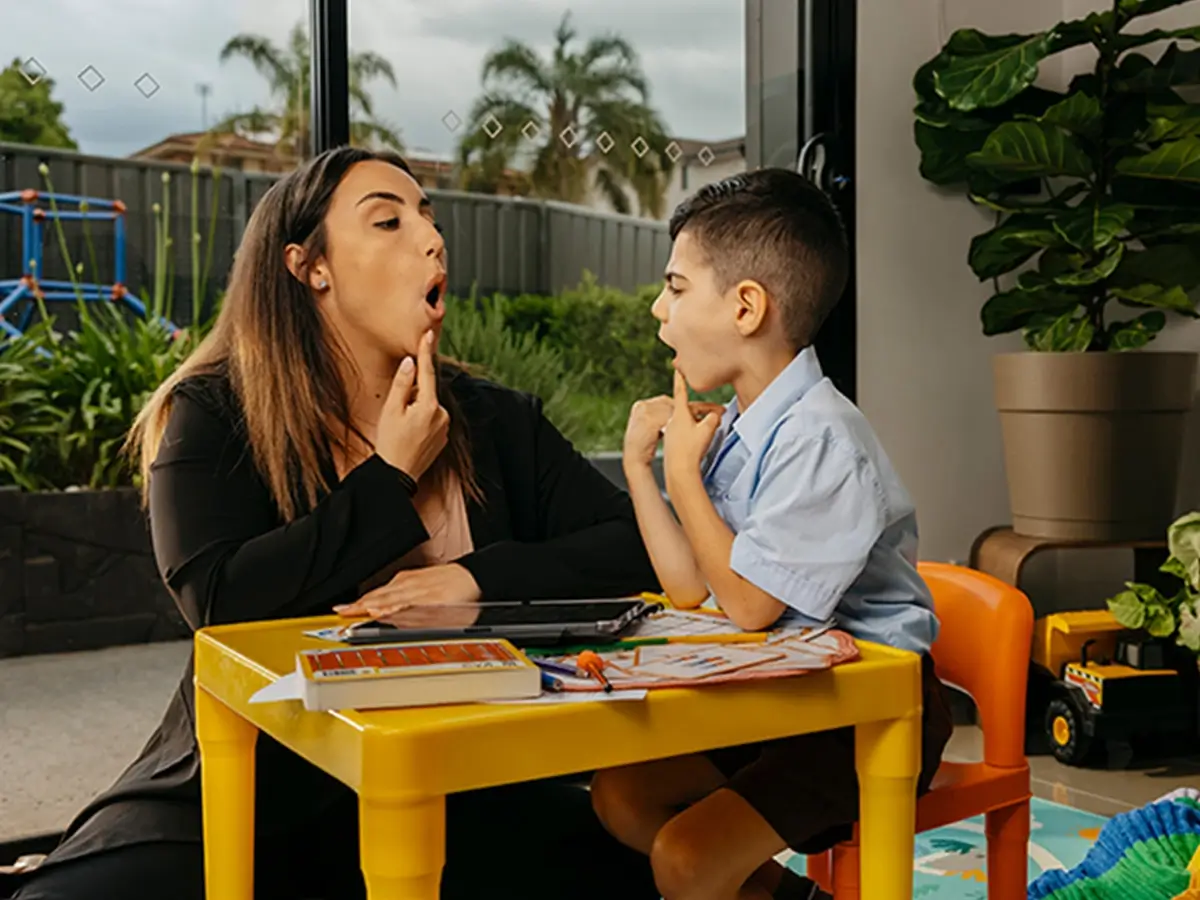
Speech and language therapy for autism is a personalised support approach that helps children improve how they understand and use language, whether through speaking, gestures, devices or images. It’s not a one-size-fits-all service. Instead, SLT focuses on communication in the way each child learns best.
Language development
Expanding vocabulary
Helping children learn new words so they can express a wider range of ideas, emotions and needs.
Improving listening and comprehension
Supporting children to better understand what others say, follow instructions and make sense of language in context.
Building expressive language
Developing the ability to form sentences, describe experiences and ask questions in a way that feels natural and meaningful.
Speech sound production
Improving articulation and clarity
Targeting specific sounds or speech patterns
Using visual or tactile prompts for practice
Social communication skills
Reading social cues like tone, facial expressions and body language
Starting, maintaining and ending conversations
Sharing interests and learning to take turns
Alternative communication tools
Augmentative and Alternative Communication (AAC) devices
Picture Exchange Communication System (PECS)
A structured system where children learn to use picture cards to make choices, ask for things and express needs.
Gestures, signs and visual communication supports
How can speech and language therapy help with autism?
Speech and language therapy can play a vital role in supporting autistic behaviour and communication, offering strategies that are practical, personal, and empowering.
Whether your child has just received a diagnosis or is already on a support pathway, early access to therapy can make a meaningful difference, especially during the crucial window for early intervention for autism.
The benefits of speech and language therapy for autism are wide-reaching and go well beyond just speech. It can help children and young people with confidence, learning, relationships and everyday routines.
Improves verbal and non-verbal communication
Reduces frustration caused by limited expression
Strengthens relationships and peer connections
Builds independence in school and everyday tasks
Speech therapy equips children with the language they need to follow instructions, ask for help, join classroom discussions or take part in routines like shopping or group activities. These skills help build daily living skills for autism.
Helps with success in education and later work
Strong communication skills set the foundation for learning and future employment. From classroom engagement to job readiness, SLT can help children and teens take part with greater confidence.
How support workers can help with speech therapy for autism
Speech therapists guide the plan. But it’s the everyday reinforcement, often supported by disability support workers, that helps communication skills stick.
Through therapeutic supports, support workers can assist children in practising communication strategies consistently across different settings.
Reinforcing daily communication
- Practising therapy activities at home or during outings
- Using visual aids, flashcards or AAC tools during routines
- Modelling conversation skills in relaxed, everyday settings.
Supporting emotional and social confidence
- Creating a safe environment for your child to practise talking
- Encouraging participation in playgroups or community events
- Using fun language-based games to boost self-expression.
Organising and tracking progress
- Helping book or attend speech therapy appointments
- Sharing updates with therapists and families
- Noticing and documenting milestones or behavioural changes.
When it comes to finding autism support workers who understand your child’s needs, the Mable platform offers a range of independent, experienced professionals to choose from.
Support workers can also assist with transportation to therapy and community programs.
What are some good speech therapy activities for children at home?
Looking for ways to support your child between therapy sessions? Here are some easy, engaging ideas:
- Name games – Help your child learn and recall names of people, pets or objects.
- Role play – Act out common situations (like shopping or saying hello) to practise social language.
- Picture sequencing – Lay out images to create a story. This helps with sentence building and understanding order.
- PECS practice – Encourage your child to request items or express emotions using picture cards.
- Sing-alongs & rhyming – Songs improve rhythm, articulation and word recall.
- Interactive apps – Use therapist-recommended tools that teach labelling, emotions or categories.
- Storytelling with visuals – Use books with pictures or drawings to build expressive language.
Always consult your child’s speech therapist before introducing new activities to ensure they align with their individual goals and needs.
Does NDIS cover speech therapy and language support for autism?
It can, depending on your NDIS Plan and support needs. Many families use NDIS funding to access speech language therapy for autism.
Here’s how it typically works.
- Improved Daily Living – Covers professional speech therapy sessions and allied health plans.
- Core Supports – Can be used to assist with daily communication activities through support workers.
- Social and Community Participation – Supports involvement in community events where communication skills are used and reinforced.
Find out more about NDIS funding for autism, allied health support for autism, or NDIS social and community participation supports.
Resources for autism speech and language support
- Speech Pathology Australia – The national peak body for speech pathologists in Australia. The website offers a directory of certified professionals, helpful fact sheets and up-to-date guidance on accessing speech therapy support across the country.
- Autism Awareness Australia – A leading not-for-profit organisation dedicated to improving the lives of autistic people and their families. Their site includes practical toolkits, videos and support resources for all ages and stages.
- Raising Children Network – Autism and Communication – A government-supported parenting resource with evidence-based advice on autism and child development. Its autism section includes clear, actionable information on communication strategies and therapy options.
- Mable’s Topic Library on Autism support – Explore our library of articles, guides and real-life stories on autism support, including communication, daily living skills, early intervention and how to find the right help through the Mable platform.
Frequently asked questions
What is the goal of speech and language therapy for autism?
The goal is to support each person's ability to understand and express language, whether spoken, written, gestured or through alternative tools, so they can connect, participate and live more independently.
How can speech therapy help a non-verbal child?
Therapists may use AAC devices, picture systems like PECS or gestures to help non-verbal children communicate their wants, needs and feelings effectively.
How long do autistic children need speech therapy?
It depends on the child's goals and progress. Some may benefit from short-term support, while others may need ongoing therapy throughout school years.
What age is speech therapy most effective?
Early intervention often leads to the best outcomes, but it's never too late. Children, teens and even adults can benefit from speech and language therapy at any stage.
What's the difference between SLT and occupational therapy?
Speech therapy focuses on communication, while occupational therapy for autism supports motor skills, sensory processing and daily routines. They often work hand-in-hand.
The information provided in this article is general information only and based on current information at the date of publication. In addition to considering the information shared in this article, Mable encourages you to conduct your own research and seek independent medical advice relative to your circumstances. If you wish to use your NDIS funding on any of the services outlined above, Mable recommends that you check your NDIS Support Plan or speak with your Plan Manager to ensure that the appropriate services are coverable.