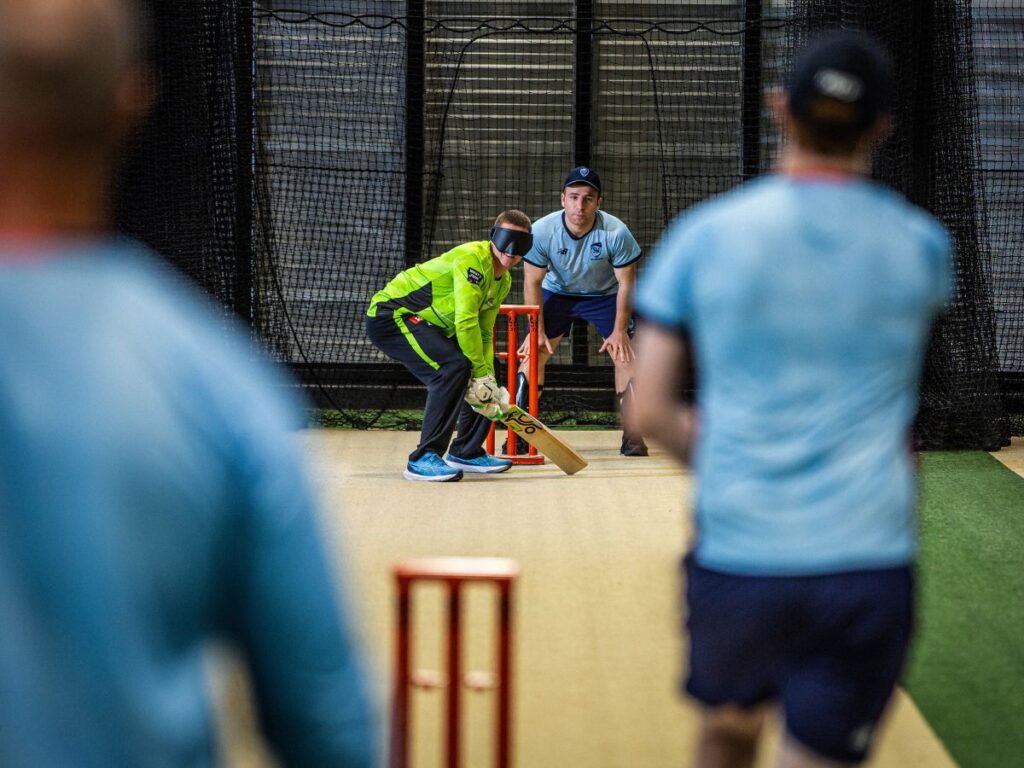
Blind cricket is a great way to stay active, be part of a team, and enjoy a game that has a long Australian history.
Like other inclusive sports, it’s designed so people who are blind or vision impaired can also take part safely and confidently. That’s why there are some helpful modifications to make the game more accessible, like an audible ball with a rattle inside it, as well as underarm bowling.
The power of blind cricket
We spoke with an experienced blind cricket player, John* about his experience with the game.
“Visual impairment doesn’t have to stop you from playing cricket. Blind cricket is an inclusive community that gives me a sense of belonging. It allows me to regularly connect with my team in a fun environment away from the pressures of day-to-day life. And it’s great just being outdoors.”
John shared another big benefit: “Blind cricket has provided me with lifelong friends.”
What makes blind cricket more accessible
Blind cricket is based on mainstream cricket with a few clever adaptations to support people who are blind or have impaired vision. These include:
An audible ball so you can track it by sound
No overarm bowling – only underarm is allowed
Deliveries must bounce twice if the batsman is completely blind, and at least once if the batsman is partially blind
When the ball connects with the bat, the wicketkeeper calls out to the fielders to help them work out where the ball is
Players who are completely blind are supported by a runner between the wickets
Teams are made up of players with different levels of vision, from totally blind to partially sighted players.
John says, “I find the modification that has the biggest impact is the use of the ball that makes sound so we can track it by listening. But also the support from our coaches through regular training has been a big help for my development.”
5 top tips for getting started with blind cricket
1. Research the game
If you’re interested in trying blind cricket, a good starting point is to learn about how the game works and what to expect. The most important skills you’ll need in blind cricket are your hearing, spatial awareness and communication.
2. Connect with a local blind cricket club
The best way into playing blind cricket is to connect with a local Blind Cricket NSW club. You can do this by emailing at blindcricketnsw@gmail.com Cricket NSW also works in partnership with Blind Cricket NSW. They offer blind cricket sessions at schools. To find out more, you can get in touch with Jason Stubbs at jason.stubbs@blindsportsnsw.com.au
3. Buddy up
It’s normal to feel some nerves before your first blind cricket session. That’s where a ‘buddy’ system can be really helpful. It’s something that is often used in blind cricket training sessions, especially for first-time players.
Coaches will pair you up with a more experienced teammate and they can help you while you train. It might be guiding you where to move, when to expect the ball, or explaining the next part of the session and what you will do.
As you develop, John says it’s a good idea to find a mentor. “Connecting with more experienced players will really assist you with your cricketing journey.”
4. Take your time building your cricket skills
It’s okay if the first session feels unfamiliar; it’s very natural. The goal is to get a feel for the game and meet the team.
Regular training, getting to know how your team communicates, and taking it slowly can make a big difference in building your confidence.
5. Bring your support worker or a friend
While having a buddy on field is great, you also have the option of taking a support worker or friend with you. John says, “My support worker has been such a great help to me.”
A support person can help with many things like finding the right club/session, transport, getting familiar with the space, helping you buy cricketing gear, as well as being an extra set of ears as you learn the rules of blind cricket.
Ready to give it a go?
Taking the first step to playing blind cricket is exciting, but it can also be a bit daunting. With Mable, you can find an independent support worker who can assist you.
An extra hand as you get started can help you feel more comfortable, allowing you to focus on learning, connecting with your teammates and most importantly, enjoy the game.
Mable’s Can-do Guides are created in collaboration with people with disability. Content in these guides is general in nature, based on the experience of those interviewed, and may not be applicable to all.