A note on language: The author has chosen to use 'identity-first' language when referring to autism and autistic people. We understand different people have different preferences, and we recognise and respect every individual's right to choose how their identity is described.
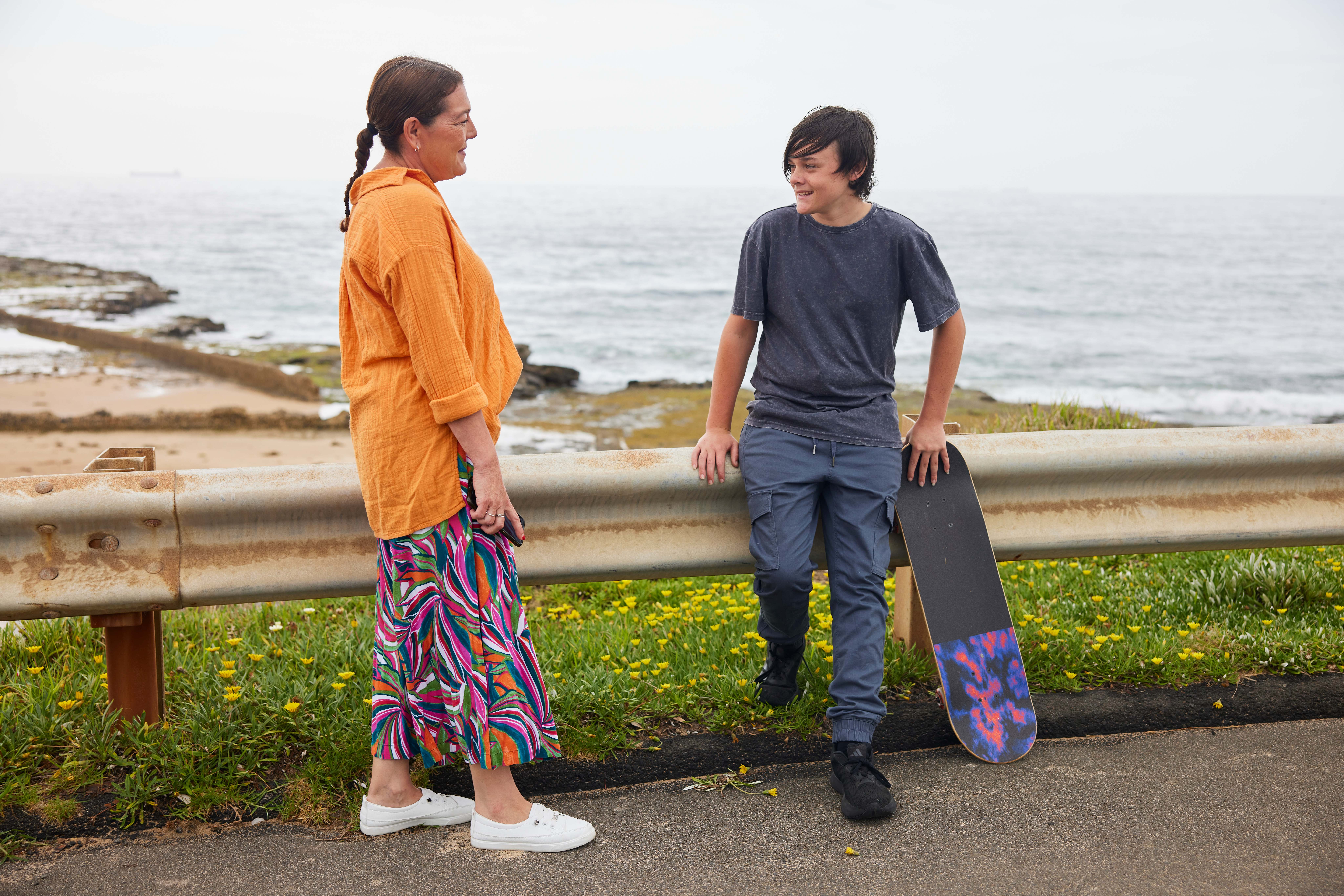
"Mum, now don't cry," my boy announced as he stepped into the room, wearing his new high school uniform.
It hung off him, loose and oversized - just as it had on his first day of primary school. The memory undid me... Before I could stop it, the floodgates opened.
"Sorry, my love. I know I'm crying!" I sobbed. "I'm just so proud of you."
In truth, I felt much more.
You see, my son is autistic, and I think any parent of a neurodivergent child beginning school, be it little, big, or a changed one, will understand my emotions.
An epic journey
Starting school is a big deal for any child. But for some families, it carries an undercurrent of fear, hope, and quiet bravery.
This was certainly true for me on Owen's* first day of primary school.
I remember carrying his school bag as he looked like an ant hauling a giant crumb. As we walked through the gates, his little hand in mine, I could tell he was feeling confident. I'd carefully prepared him with extra orientations, social stories, and playdates with other kids so he would.
But me? Not so much.
I was still questioning whether mainstream schooling was right for him. We'd weighed the options, but I wasn't 100 per cent sure of our choice
Then, he let go of my hand.
School anxiety is real
While I'm not on the spectrum myself, like many parents of neurodivergent kids, I'm deeply attuned to my own child. I swear I felt Owen stimming in utero - the same jerky movements he now uses to regulate. I know his sensitivities, when he's feeling overwhelmed, and the tricks to calm him. Even today, I instinctively cover his ears when a motorbike roars past.
The point is, while I don't experience the world through his heightened senses or his unique brain, I've learned how he does - from him.
But others don't know him as I do. They can't. And I think that's one of our biggest anxieties as parents of autistic kids going off to school: the fear they won't be understood, and that the people caring for them won't have our knowledge, strategies or spidey parental sense.
In some ways, I was right.
While Owen had many wonderful teachers and a school striving for inclusion, those primary years weren't easy. Not on him. Not on us.
There were times I considered homeschooling because the environment was simply too hard for him. Times I went into bat for him, only to be ignored. Times when school felt cruel. Like when his neurotypical brother opened his seventh birthday invitation in six months, I cried for Owen - he hadn't received any. Or when he had a meltdown on school camp, but we were told he was being "disrespectful" on the phone when we were told to come and get him, now.
Then there were also beautiful moments. Owen's social skills blossomed at school. He made a best friend - another autistic kid. He thrived at times: participating in the school play, becoming a library monitor, bringing home artwork well beyond his age-ability, surprising his grade by nailing a speech he'd practised, and mentoring younger kids so they had a friendly face at school.
I also had many small advocacy wins - initially to help Owen, but over time, creating lasting change for other students like him.
And now, as I close the primary school chapter and open the high school one, I feel an avalanche of emotions.
First high school steps
Seeing Owen in his high school uniform, I realise how real this change is, and how fast it's coming.
Unlike primary school, where he had to sink or swim, Owen will begin high school in a support unit: a smaller setting, familiar teachers, and a slower integration into mainstream learning.
Still, I feel it all:
- Fear - What if a support class limits rather than lifts him? What if he feels too different? Hope - A deep, stubborn hope. That he thrives - feeling happy and learns in a way that finally fits because his autistic needs are not just accommodated, but understood.
- Anger - Not at the school, but at the world. That it still isn't built for kids like mine. To give Owen a more positive high school experience, I had to seek out something separate. I wish the world were softer, kinder.
- Relief - That support like this exists - special classes, teachers' aids and tailored learning programs, etc. Our neurodivergent kids are more 'seen' than they once were and I am grateful for this.
- Pride - "Proud" was the word I reached for when Owen asked why I was crying. Because stronger than fear, anxiety, or any other feeling I have about him going off to school, I'm profoundly proud of him. Not only of how far he's come with his social skills and more, but of his courage, his resilience and the effort he makes every single day just to exist in a neurotypical world. And yes, I'm also proud of myself - for getting him to a point where he's ready to take his next school steps.
Wherever your child is going to school this year, you are in this together. You've prepared them for this moment, and you'll keep supporting them every step of the way. You'll be their advocate. Their biggest cheerleader.
You, too, will be proud.
*Owen's name has been changed to protect his identity.