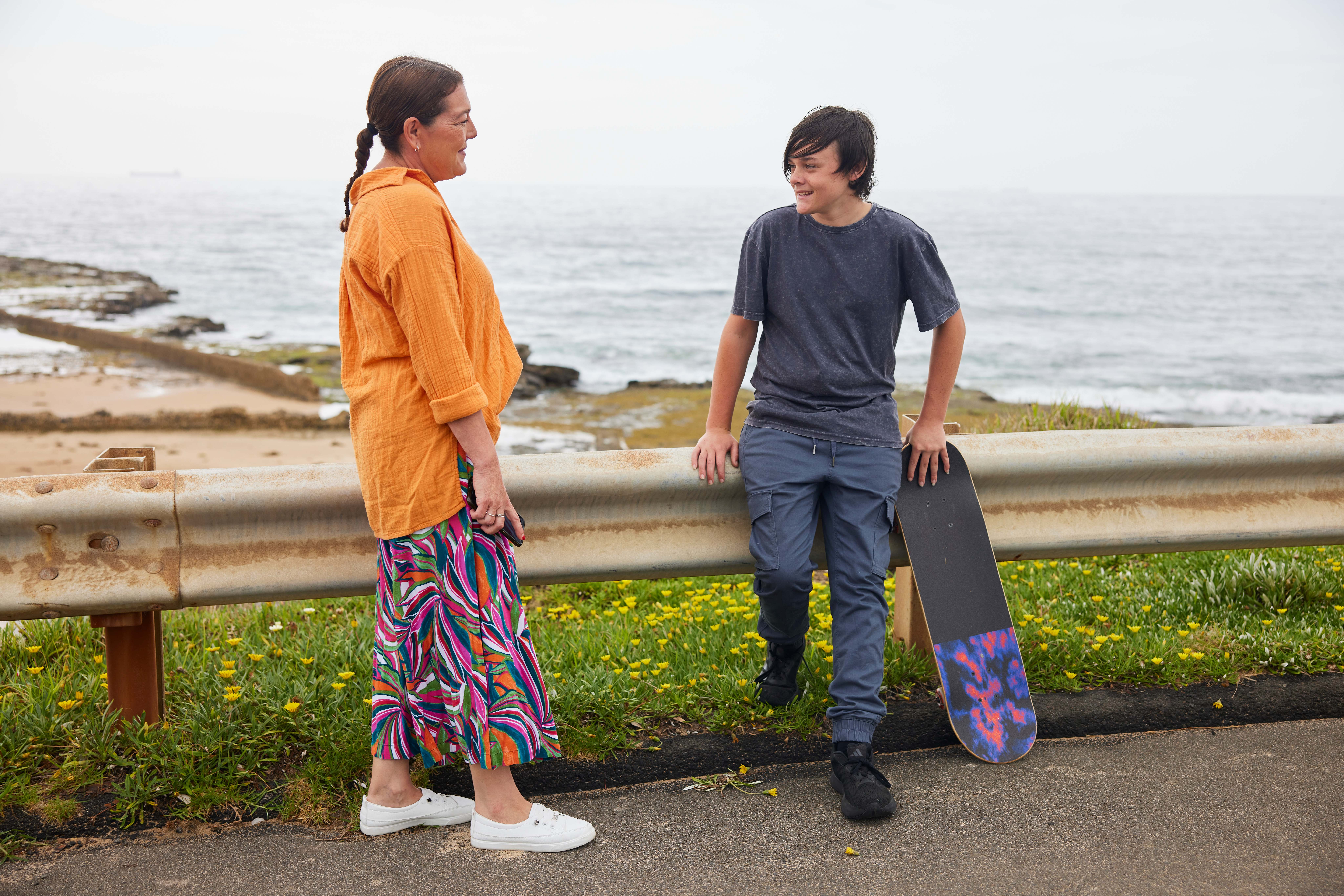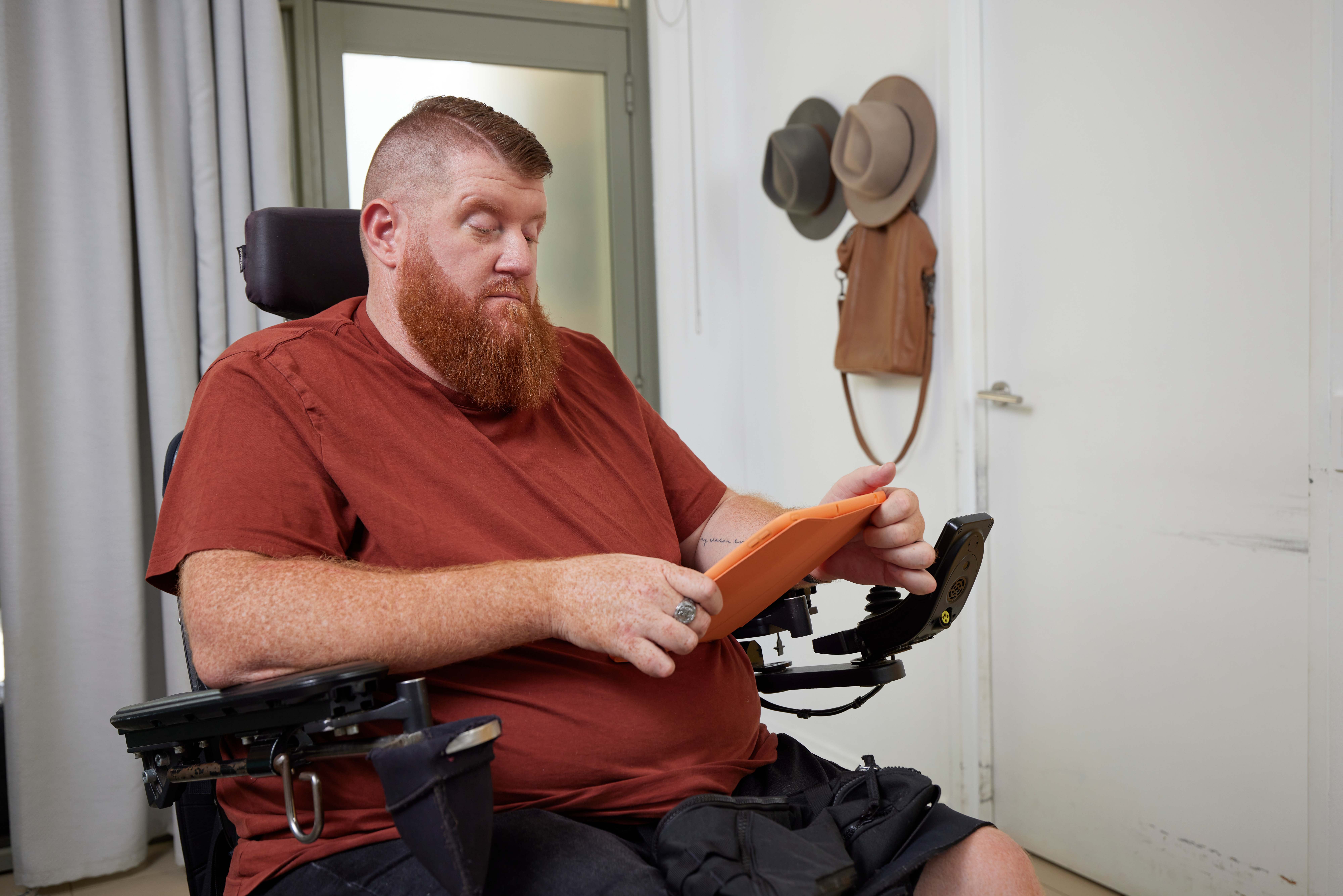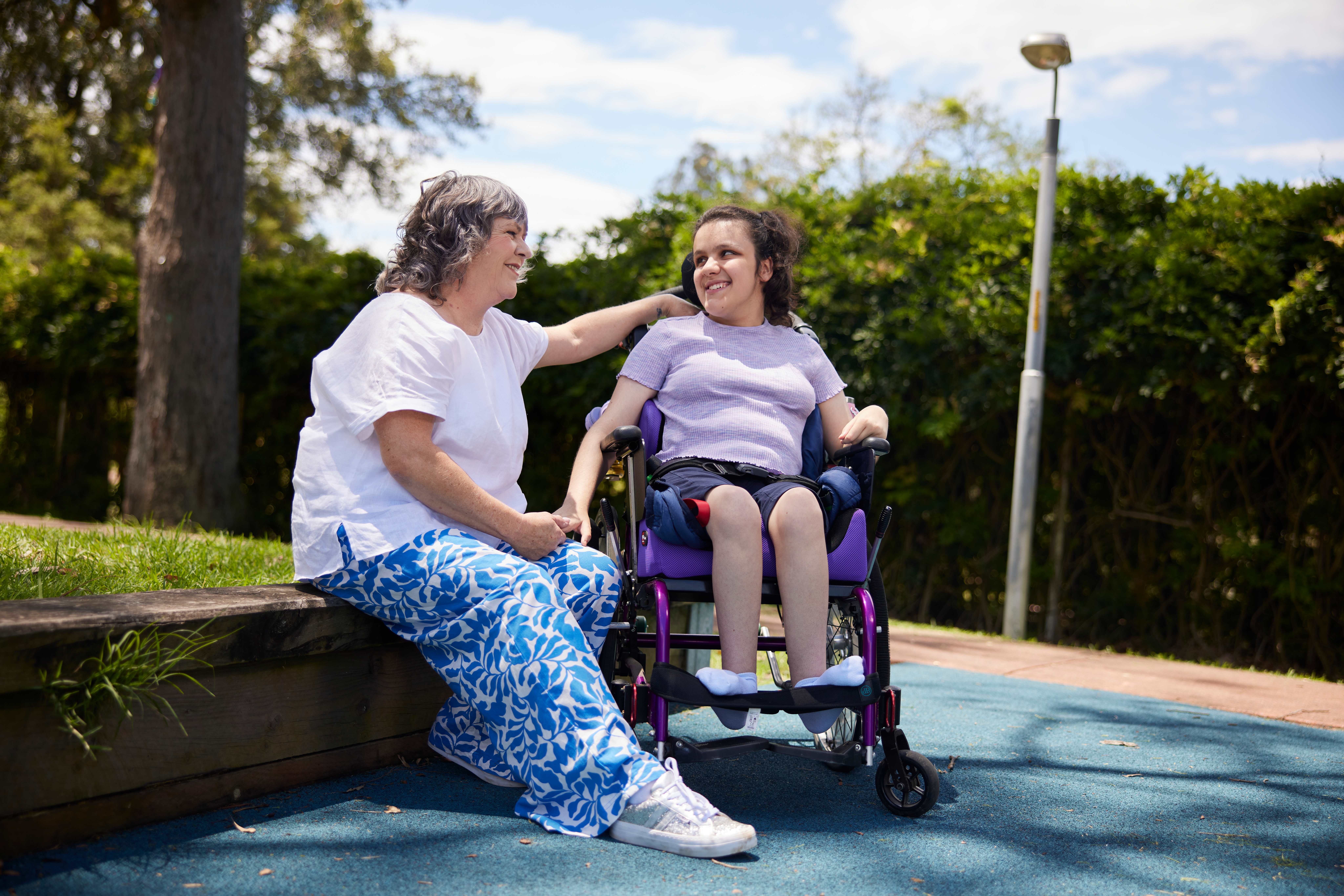
Living with Parkinson's Disease has reshaped Pam's day-to-day life in many ways. With the help of independent support worker Marina, Pam's everyday life has transformed. The pair have developed a meaningful relationship based on trust, mutual respect, and a shared understanding of Pam's needs and aspirations.
Daily life with Parkinson's
Parkinson's is the world's fastest-growing neurological condition. It occurs when your brain does not produce enough dopamine, which impacts your movement and mood.
For Pam, her mobility has become more limited due to her Parkinson's, requiring a walking stick indoors and either a walker, scooter or electric wheelchair outside. She also experiences slurred speech and slower movements.
Daily life with Parkinson's can present some challenges. One of the most frustrating aspects of Parkinson's for Pam is the way people perceive her. Her slurred speech and slower movement sometimes lead others to assume her cognitive abilities.
Pam wishes people knew Parkinson's does not define her intellect or her ability to contribute meaningfully to the world. It is a part of her life but does not diminish her identity.
Sharing the lived experiences of others
Pam has written a book about Parkinson's, Parkinson's A Voice in the Wilderness: Voices of Diagnosis. Personal Experience, which chronicles the struggles faced by patients worldwide in obtaining a diagnosis.
It took Pam several years to be diagnosed, an experience which was not unique to her. She found many other people and their carers who had similar or worse stories online.
Over time, she gathered some of these stories from the people she had met in online support groups and forums and compiled them in her book.
Through her writing, she hopes to spread awareness and foster understanding.
From practical support to a meaningful connection
Pam's life has changed significantly since meeting Marina. She initially sought assistance with exercises and daily tasks, but Marina's support quickly expanded beyond that.
"She's just wonderful. My life would be very difficult without her", Pam gushes.
Pam attends exercise classes to help with mobility, and Marina suggested accompanying her to these sessions. Marina not only assists during the classes but also reinforces the exercises at home, ensuring Pam gets the most out of them.
"The exercise physiologist is very happy with her too!" she says.
Creating a sense of achievement
Living on five acres, Pam has always loved tending to her vegetable garden, but living with Parkinson's Disease has made it more challenging. With Marina's help, they work together to clear and replant the garden every few months, ensuring it remains vibrant and productive.
One of their most enjoyable projects was painting a new beehive, a creative endeavour that allowed Pam to reconnect with an old love—painting.
"Marina is helping me still achieve things that I didn't think I was able to do anymore."
The support Pam receives extends into the emotional and psychological aspects of her life, and Marina's presence serves as a motivator.
"Sometimes I need a bit of a push. It can be so easy to stay in bed and do nothing. If I didn't have Marina, sometimes I would," she shares.
Pam and Marina: The perfect fit
The bond between Pam and Marina is one of deep mutual appreciation.
"We work really well with each other. There's a lot of give and take in the relationship".
Marina doesn't just assist with appointments and exercises—she enriches Pam's life. Their relationship is a testament to the profound impact the right support worker can have on someone's life.