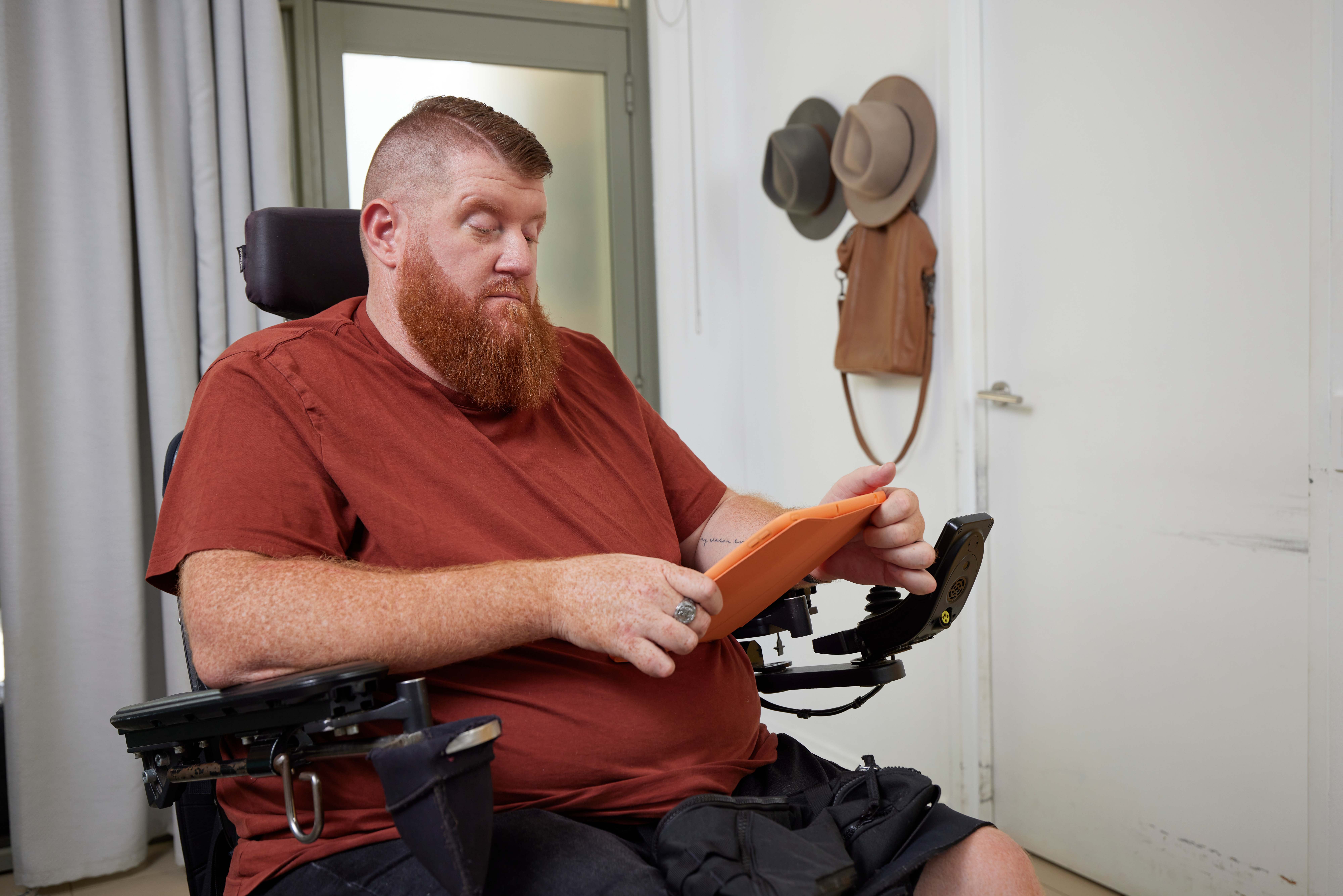
For Mable independent support worker Kate, making a difference in people’s lives while having flexibility has been a dream come true.
A former social worker, Kate says the difference now is she can choose her preferred hours and the support she provides.
“I wanted to use my skills in a more flexible way, but also be more responsive to the people I work with,” she says.
“I’ve worked in the disability and healthcare system. In what I do now with Mable, I’m working with people to identify challenges and solutions, and I love it.”
Variety of support services
Kate’s clients include a primary school child diagnosed with Autism Spectrum Disorder (ASD), a person with vision impairment, 2 people who live with mental health conditions, and a person diagnosed with Parkinson’s Disease.
“The support I provide depends on the person and their needs,” Kate explains.
“It means every support session is different. One day, I’ll be picking up the child from school and listening to The Wiggles so her mum can spend time with other family members.
“Another day, I’ll be reading out emails for a client and typing up replies and helping them with a new website.”
Kate also provides social support. “I visit a person in a residential aged care facility twice a week. They live with dementia.
“Some of their family members live interstate and overseas so they need someone to provide this person with company and keep them connected,” she says.
“We do Zoom calls and the client loves that. I facilitate their communication, read a magazine with them, and go with them for walks.”
Skills and qualities of a support worker
Confidentiality is high on the list for Kate. “The world is a small place and you must honour people’s privacy,” she says.
“Be trustworthy, reliable, honest. Start where the person is at, don’t come with preconceived ideas. For example, if the client has autism, visual impairment or dementia, don’t assume anything about what that might mean. Be guided by the person.”
Kate says support work is a two-way transaction. “The people you work with aren’t just the receivers. There’s a lot they can teach you about life too. I’ve learnt so much about how the community responds to people with disability, and how to deal with that with respect and understanding.”
Building a successful business on Mable
From the beginning, Kate has always replied to messages from people who have posted job ads on Mable or reached out directly to her through the platform.
She has built a solid foundation around repeat clients.
“I’m also very proactive about being visible. In my messages, I always explain that I have decades of experience in the health sector and suggest they look at my profile.”
Kate adds, “I never take it personally if someone doesn’t reply. They may be looking for someone older, younger or someone who offers something different, and that’s okay.”
Kate felt it would be hard to run her own business, but soon found that Mable gave her all the tools she would need to make it simpler.
“This is the first time I’ve been self-employed and I’m grateful for the framework Mable provides. Invoicing, service agreements and that kind of paperwork is not in my skill set, but it’s all right there for me. I use the superannuation and tax calculators, and I’ve dabbled in some of the free training available,” she shares.
Work-life balance as a support worker
As someone who lives with Cystic Fibrosis, Kate appreciates being able to choose when she works. “It’s the perfect way to combine work with my condition,” she says.
She also has a son in Year 11 at school and can be there for him during stressful exam times or when he has an after-school event.
Benefits of being a support worker on Mable
In discussions with friends, Kate often talks about how “Mable has changed her life”.
She says, “I’ve already had a few people I know sign up to be an independent support worker on Mable. Mable is a solution!”
Now that she has successfully established her business on Mable and has one-off and repeat clients, Kate can continue to grow it as much as she chooses.
“My biggest upset is that I didn’t discover Mable years ago,” Kate says. “I really like the people I work with and enjoy spending time with them.
“I’m away from office politics and all the stuff you deal with in a corporate environment. I get so much joy out of being of service. My clients and their families appreciate what I do, and it feels good.”
Find your kind of independence by joining Mable as an independent support worker today.