You’re a father. You’re a mother. A sister, brother or a grandparent. You’re an aunt, a neighbour or a friend. But you’re also a carer.
While we acknowledge that you may not particularly like the word ‘carer’, there’s no denying the fact that you provide valuable support to a loved one, support that enriches their life as well as yours.
Across Australia, there are more than 2.65 million carers, out of whom, 861,000 carers are primary carers (those who provide the most informal support to a family member or friend).
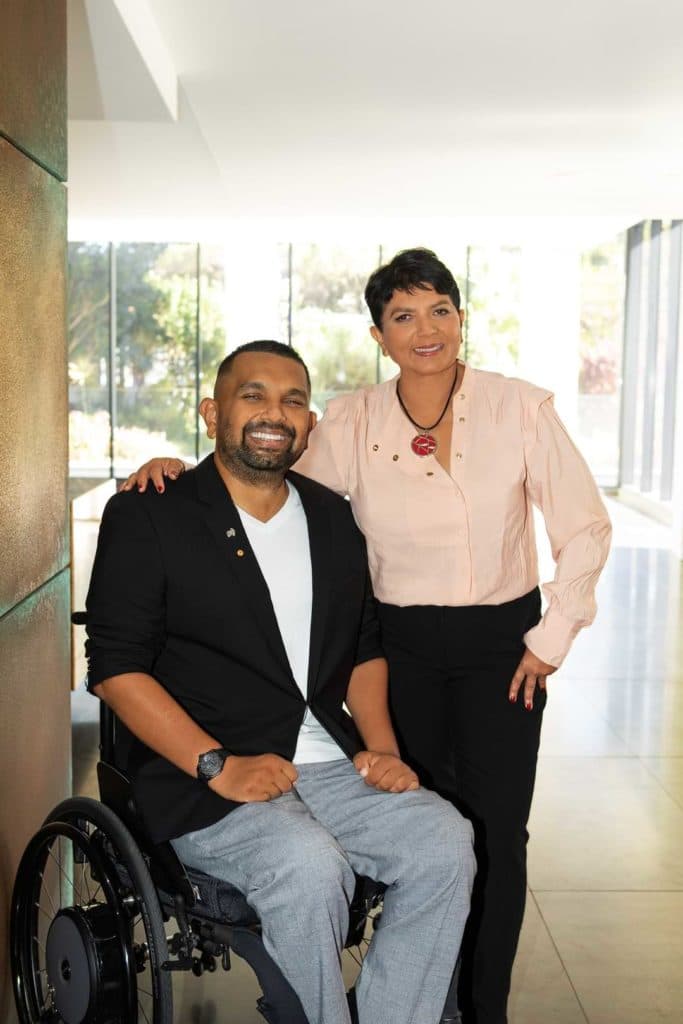
Chithrani Palipana, a well-regarded disability advocate, supports her son, Dr Dinesh Palipana OAM. Libby Ellis, Individualised Living Program Manager at Mable, supports her older brother Matthew.
For National Carers Week 2022, which runs from 16-22 October, we invited them to talk about their relationships and how those have evolved over time, as well as their learnings over time that could help others in similar relationships.
National Carers Week 2022 is an opportunity to acknowledge and celebrate all that carers do and how they advocate for their loved ones.
Chithrani and Dinesh “enjoy doing anything and everything together”. She says, “While the circumstances may have forced Dinesh to rely on me for many daily living tasks, we do it all together with a sense of humour.” Dinesh’s positive outlook on life, she says, is contagious. “It’s his strong will, determination and courage that has made him who he is today.”
“We love and respect each other. We do have agreements and disagreements like every other mother and son, but we get along really well,” she adds.
Libby and her older brother Matthew, too, are incredibly close. “He’s very cool and has a fantastic, absurd sense of humour! He wakes up every day like it is the first day. I wish I moved through the world like that! He is a nature lover, he loves anything to do with water and wind especially. He notices things in nature that I skip by.
Libby adds, “I would say that Math is also very tenacious and courageous. He has had a lot of support workers come and go over the years and he maintains his energy and willingness to accept people on face value. This is even more meaningful to me because Math can’t speak and has a pretty significant intellectual disability.”
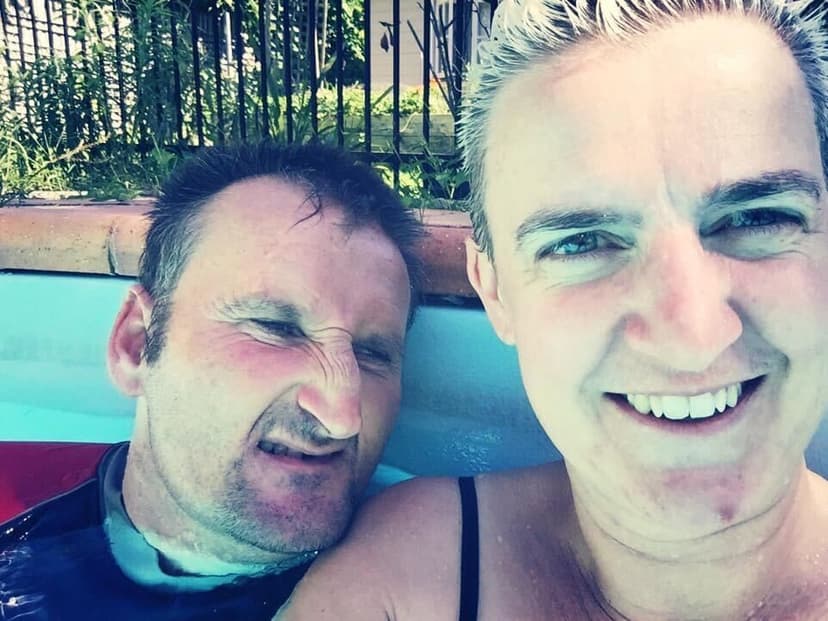
Aside from the “general ebbs and flows of sibling relationships”, their relationship improved as Libby was challenged about whether she saw Matthew as an adult or more like a child, or as someone she didn’t understand. “In my younger days, I used to talk about him in front of other people. I got some good help by learning more about the social model of disability. I also met some great leaders who taught me that families are not automatically advocates. Families can be blocked by low expectations, stereotypes and by past negative experiences. I learnt there is a difference in advocating for our own needs as family members’ and others’ needs. They can be quite different.”
Wary of the ‘carer’ label, Libby says, “I don’t think of myself as a carer. Even the term ‘sibling’ seems a bit mechanical to me. I do, however, provide lots of support to Math and he helps me too.”
Receiving funding and support has made a significant difference to all of their lives. While for Chithrani and Dinesh, getting paid support has meant “reduced workload and freedom for both to live life to the fullest”, for Libby and Matthew, it has meant being “more connected”. Libby, who’s still quite involved in helping Matthew with his support team, adds, “I am able to love him as a sister.”
Matthew lives in his own home. He doesn’t live in a group home or with parents. He is supported by a combination of supportive housemates, support workers, and his family. His housemates have been non-disabled people who provide him companionship and some support in his home.
There’s no doubt that caring for or supporting someone is not plain sailing. Chithrani says, “It can have a huge impact on your life and wellbeing. Take time to rewind, do at least one thing you love doing.”
She adds, “While I was taking care of my son, while he was at the uni studying for his medical degree, I sat outside the school and while waiting for him, I completed a Graduate Certificate in Case Management and a Masters in Rehabilitation Counselling. Today, we are both in a good place as a result of achieving what we both were passionate about.”
For Libby, it’s been a joy to see Matthew live his life in his own home. “I especially love seeing Math have relationships with his support workers where they do things together that I know I can’t do. This has helped me see that I can so easily have low expectations of him. A recent example was seeing him ride on a jet ski with one of his support workers — a total revelation! My aim in life is that Matthew feels proud of who he is, and the people around him are critical to this.”
Whether you're looking for an Independent Support Worker for your loved ones or are looking to provide support, Mable has got you covered.